

Papa's Projection
A story of grandfathers and ghosts

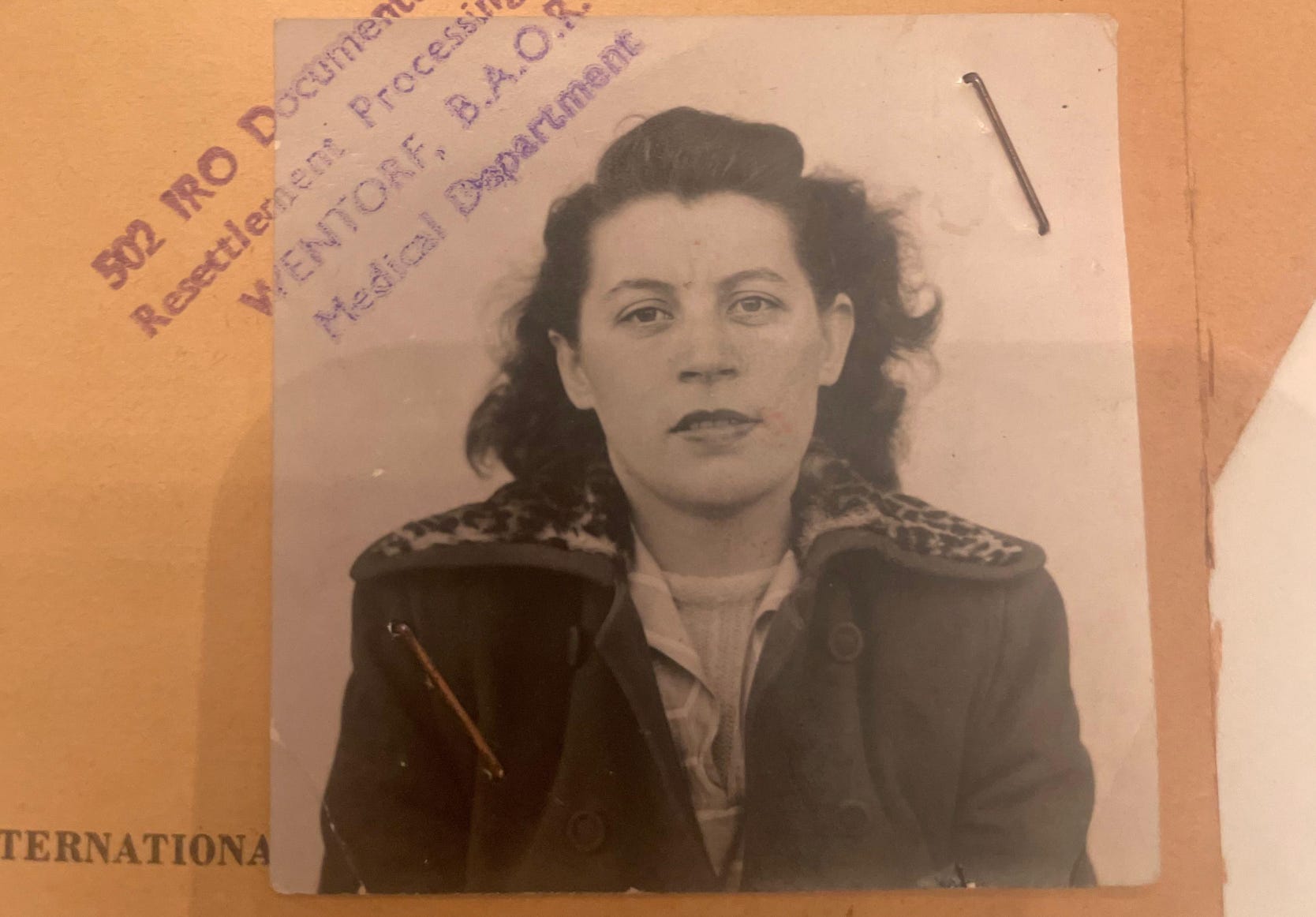
Author’s note: My grandmother, Suri Lichtschein, a’h, passed away last month at age 99. In the weeks since her death, I’ve been writing about her while combing through the breadcrumbs of her wondrous life. I’ll have more on that soon, but in the meantime I feel compelled to share a story I came up with three summers ago, back when my grandmother was very much alive and I was working at a summer camp, telling stories all day long to campers who couldn’t seem to get enough of the scary stuff. One rainy afternoon, they asked for a ghost story, and I gave them Papa’s Projection.
Papa’s Projection is about the death of a grandfather, and even though I never had a grandfather, I had a pair of wonderful grandmothers, and the love each shared was enough to cover the two shadows over my life that never learned my name.
Also, I really like the central character in this one, Marvin Goest. I first wrote about him in Purimfest, 1988 earlier this year.
It was the fourth day of September, the first week of school, and the last night of Papa’s life. Bilee stood in the third floor hallway of Holy Harlow with her parents, waiting, watching, doing nothing. In front of them a closed door wore Papa’s English name – MARVIN GOEST – and his room number, 378H. Doctors and nurses had been in and out for the last hour, faces slack, pens clicking, avoiding the three family members standing across the hall. One kind woman with red hair stretching down the middle of her coat noted the Baynonis’ existence and cruised the metallic floor to ask if they wouldn’t be more comfortable in the waiting area just around the corner. Mom shook her head. “We want to be as close as we can to him while he’s still him.”
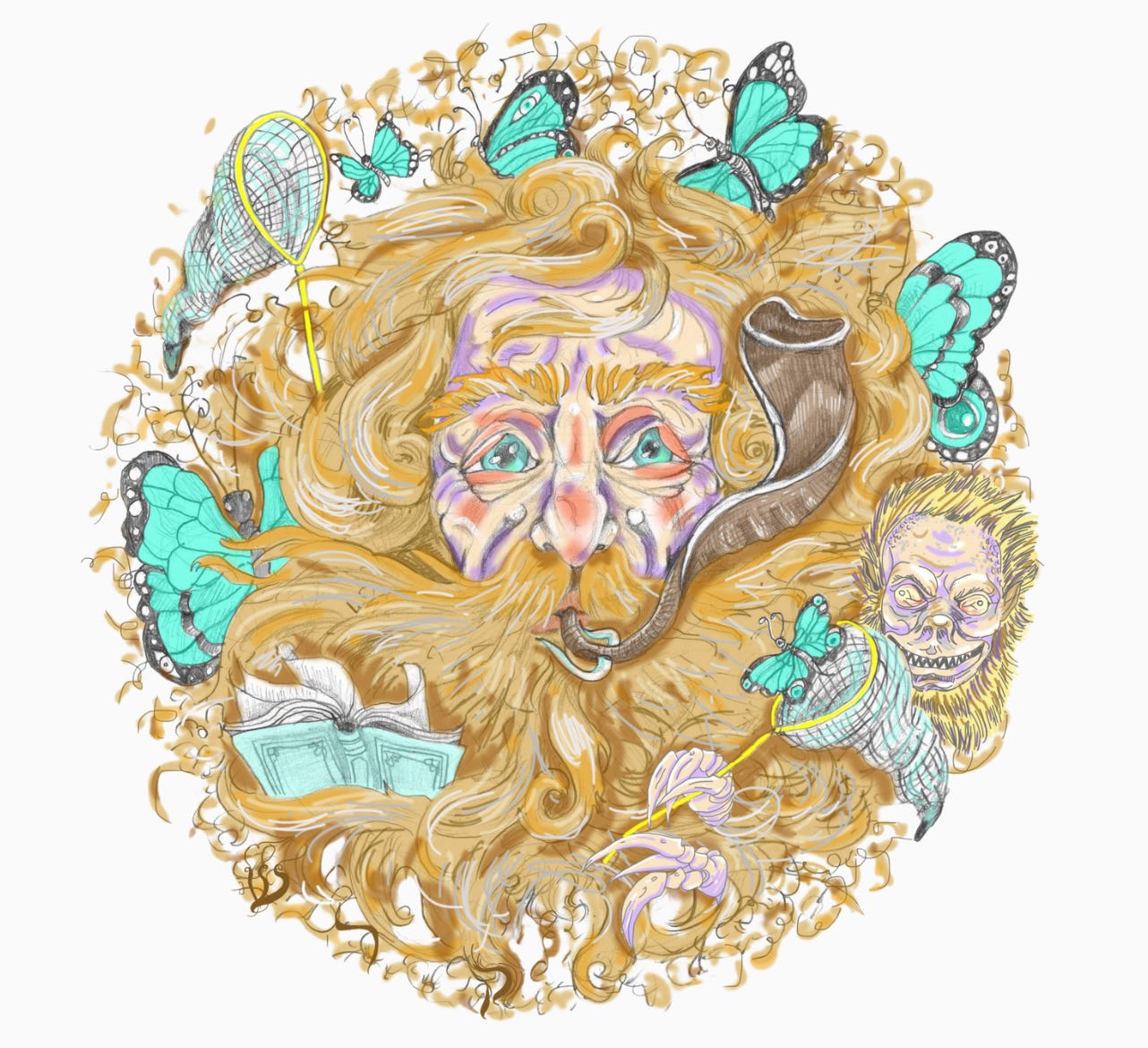
Bilee got that. Papa was lots of people. It was one of the things she loved most about him. Sometimes he was a child, as playful as her. Other times he was the kindest adult, taking care of things like food and TV and slipping her rolled up gelt. Each year as Adar approached, he became her costume co-designer. On demand, he could turn into a belly-shaking voice-shimmying raconteur of note, and Bilee still cherished the memory, just the once, of Papa as a grim protector, with an unusual weapon in his shofar, which he used to fire polished rocks like darts from a blowpipe. This was in the service of skipping smooth circles across the surface of Lake Mont Loch on the one camping trip they took together. Bilee thought of that trip often, and not just the odd promise she made to her grandfather on the second night, but all of it. It was an absolute life highlight.
Papa was also her front row cheerleader at theater club plays and volleyball games and starting last year, debate matches, standing out aurally because of his chosen method of blared applause, green curl in excited hand, his presence a shot of needed confidence with Mom at the office half the time and Dad on labor layaway. But always, first, Papa was a music man.
And of the many instruments littering his small house, his favorite to practice in the privacy of his home and also to play in the public arena of shul was the shofar.
Each Rosh Hashanah, Papa ascended to the bima of Temple Dark HaMolech and massaged notes from his special-for-the-day extra-long ram’s horn with the jubilance of a soloing saxophonist, smiling at Bilee through the divider between blasts.
Bilee loved all of the people Papa was, the many faces she’d seen in her fourteen years. Minus this last one. Because Papa wasn’t becoming someone new behind that door so much as dissolving away from who he was. And that was a terror.
The irony hospital hallway buzzed with life and Bilee herself buzzed, chasing the irony.
“Mrs. Baynoni?” A nurse with a bald head and stained green scrubs approached, chart in hand. His eyes glistened, dulled boredom projectors, not-so-secretly allied with death.
“Yes?” Mom asked.
“He’s lucid.” The nurse checked his phone. “But barely. If you want to...”
Mom nodded. Her eyes, red all evening, moistened. She adjusted her face mask and turned to Dad. Their cheeks dipped and brows pleaded in an entire silent conversation.
“I’ll stay here with Munch.” Dad slung an arm around Bilee.
Mom nodded, squeezed her daughter’s shoulder, and followed the nurse across the hall and into Papa’s room. Before the door closed, Bilee saw more silver under high-up watted lights.
Dad tightened his hold. “This is awful. The curses of mortality. Yuy.”
Bilee didn’t say anything. Dad was a non-medical diagnostician, which was airtight in moments but not when the world was in the process of tearing open.
Hugging herself, Bilee stared at the 378H on the closed door…
…and heard the breee of Papa’s shofar ringing in a new year, cold as winter, clear as water.
It was the sound of autumn arriving and with it, return. Everything was fine, the wail of the shofar promised, December was just a prelude to January, which fed right back into spring. All of it gone and then back, out just to return. A great r’tzo v’shov. An ebbing flow. The beautiful circular march back to the former place. The first place. The spot with the spring, the branches and the tree.
Papa collapsed out of nowhere a week ago. He was carrying a bag of groceries up his driveway. Mrs. Tesh, his shuggy neighbor, was walking her golden retriever when it happened. She immediately started screaming and summoned 9-1-1.
Papa was checked into intensive care, where major cardiac arrest became the name of the bad. Bilee badgered her mother without relent if he would be better in time for Rosh Hashanah. Mom demurred over and over until frowning with such sapped seriousness it slapped the answer hard across Bilee’s face. Because they soon discovered an advanced form of cancer was eating Papa’s bones, and it was late stage. He deteriorated intensely over the next few weeks. Cresting in tonight, with his condition so grave that the Baynonis came to be by his side.
The door to 378H opened. Mom stepped out. Her cheeks were fire and her hands shook. She walked over, breathing deliberately.
“How is he?” Dad asked.
Mom smiled weakly. “En… en route.” She dropped her eyes onto the floor. “He asked to see you, Bilee. He’s very weak, though. I can go in with you if you like and—”
“No.” Bilee caught the whiff of her inner con, necessary like vitamins, but also faint like Mrs. Gorenschvonz on Yom Kippur two years ago. “I want to say bye, just us two. Like out on the lake.”
Mom smiled and nodded. Her eyes were the reddest.
The walk across the hallway took a lifetime, which was nothing compared to the stretched out epoch that held over the small hospital room when Bilee finally opened the door and stepped inside.
Papa was etched on a bed, surrounded by beeping machines, terrifying in their thrumming activity. He looked smaller than Bilee had ever seen him, which was a total gut-slap. He must have subtracted a foot in height and a third overall of body mass. Bilee stuttered in her mind and nearly faltered. A whoosh from the bed. Took her a moment to realize it was the closing rattle of Papa’s voice.
“That you, sweetie?”
Bilee murmured a small yes.
“Cøme close, Jubilee. I need your help. Ün last time.” Even in sickness, his accent was thick, peasanty, distinct. A remnant of the potatoic területs of Kishvarda.
Bilee walked to the side of the bed, eyes already water because this was it, whatever it was, not something she’d really know until she knew it, at which point all knowledge would be drowned and irrelevant. This ün last time, Bilee knew, was the real ün last. “Anything, Papa. I’m your ladder, you know that.”
Papa’s limp mouth curled. “Precious Jubilee. I miss you already.” His smile dropped and so did his granddaughter’s heart. “I’m going ünderground soon. Look at me, all bones. It’s time. Like we practiced, but for real. You must wait the eight like I taught you ün then go to my grave. At the start of the second watch… look for my form. Three levels…like…like...” His face, fading, played camouflage with the eggshell sheets.
Of course, Bilee remembered the lake. “Like blowing for the dead.”
Papa nodded, steadied, resumed. “…Yes. Zaktly. Blœwing for the dead. Wait to my grave ün thœrn what rises.” Papa, veins straining, lifted his head off his pillow. “Here. Take the lock.” He reached for the metal thread around his neck and tried removing it but faltered. Bilee pulled it over his face. It caught twice on his nose, not funny but tragic. “Shøfar’s ün the back drawer. You know where.” His eyes burned like flaming coals. He looked alive for the first time since Bilee entered the room. “Remember your promise ün the lake.”
“I remember.” Bilee, sadness aside, spoke with pure confidence, Papa be proud. “And I still promise.” She had turned the phrase in her mind many times since she first heard it and spoke his own words back to him. “I’ll let up your ladder.”
Papa closed his eyes, silent for a long time. Eventually one creaked open. “I’ll send your best to dü üdder bones.” Bilee smiled and for a heartbeat her dread lifted like curtains. Papa was a jokester until the end. It was odd comfort that people didn’t change even as they underwent conscious physical decomposition.
As her dying grandfather sank back in bed, his eyelids fluttering, Bilee clung dreadfully to the time before her, every single breath of it, the few that remained with one of the people she loved most in her few years of loving, sporting, and surrounding.
A rustle behind her. Bilee turned. A nurse had entered the room to check a beep rising from a machine. It was time. Bilee said goodbye to her grandfather, unsure if he heard her, slid his chain in her jacket, and exited.
Her parents were huddled across the hall, under a sign beside a crack in the wall, rendering the spiked word HAR’LOW. Bilee’s heart felt red and roving, as wet as their faces. She felt a shiver, a horned feeling, and knew that somewhere close by but also very far away a great light had just turned off.
Papa was buried the next day.
The plot of land at the northeast corner of the YÓVEL CEMETERY was surrounded by sixty people. All of Papa’s living family and various friends and members of Temple Dark HaMolech, where Papa had been a daily minyanite and High Holy Days shofar-blower for as long as Rabbi Markus was alive. Probably longer. Papa sometimes joked that he was at Molech before even Mrs. Fleischmann, the ancient bubbeleh who set up the kiddishes in the summer months, using paper plates to swat away flies, sending her arm fat flapping like tablecloths in the wind.
Bilee listened to Rabbi Markus recite the prayers and felt the hang of metal on her neck. Tucked under her collar, a small key at the dip.
After the recitation, Dad, Uncle Maury, and her cousins Jack and Levi lowered the thin wooden coffin slowly into the ground. Inside of it, Papa was wrapped in the kittel he had worn every Yom Kippur and Seder night. The Baynoni men shoveled clods of dirt into the hole and stood around as other members of the extended family came up, one by one, some to shovel and the rest to silently show support with their presence.
Dad offered Bilee the shovel a few times but she shook her head. She had her own way of sending Papa off. Besides, she hated the packed sound the dirt made as it hit the wooden box.
It sounded so terribly unmusical. And that was an insult to her grandfather.
In the back of his house, Papa the music man had a music room. A collection of keyboards, guitars, ukuleles, drums, 808s, marimbas, harmonicas, oboes, wind-splayers, Davidian harps, triangles, chatzotzrot, lootyflutes, even a few bladed axes – Papa had played them all with the virtuosity of a sleep-starved prodigy, attributing it to what he called his “inner Hüngariün hünger.” His music room also stashed his impressive shofar collection. The curved ram’s horn called out to him, he once told Bilee, ever since he picked it up on his eighteenth birthday, shortly after arriving in New York, and blew it so loud and strong that the stained glass Daniel wrestling a lion in the northeast overhang of Melech’s sanctuary still wore the crack. Papa, clearly, was born to blœw.
Equally clear though significantly sadder was that Papa, like every human alive, was also born under the ever-present eventuality of death, overhanging like an easily excitable executioner. Bilee knew this was true in big, but until now it never seemed even remotely real in small. She chased her mind from phantoms of the past and tried pushing positive thoughts across the screen. She semi-succeeded.
With the dirt back in the ground, Bilee’s mom milled, accepting condolences from various people, while her dad discussed shiva plans with Rabbi Markus. Bilee used the schmoozy ambience to slip away from the crowd. She maneuvered to the fence at the far end of the cemetery. Just past it spread a river, slipping and sculpting, combining into a gorgeous giant patchwork, trillions of molecules together in a massive irrepressibility. Bilee knew it well. It was where Papa took her each year after Rosh Hashanah for tashlich. He once joked that “The best place to shed our sins is where we free our souls!”
Tashlich was Bilee’s favorite Jewish ritual. There was something so freeing about transferring her negative hang-ons, what Papa and Rabbi Markus, those old-meaning Jews, called “sins.” Bilee didn’t know about sins, thank you Philosophy Tube and her maternal inheritance of ambivalence, but she also new that her brain leased her enough negative real estate to keep her miserably well-housed every moment of her life if she wanted. Presently, she chose to fight that impulse, but like many things, it took self-facing confidence she only often had.
“Bil, that you?”
She turned around. A figure was silhouetted in the sun. She held a hand to her eyes and Koby Kahn narrowed into clarity. He was two grades above her but that never stopped them from breaking into the candy cabinets together during Shabbos mornings at Melech. He was also the only high schooler she had invited to her Saturday night bat mitzvah party two years ago and they still sometimes walked back from the bus stop together when he didn’t get a ride from another floor hockey player.
“Hey Koby.”
“What are you doing here?”
She tipped her head to the people around Papa’s grave. “That’s my grandpa.” One hand absent-mindedly slipped to her neck and felt the chain. “He died last night.”
“Oh shit.” Koby looked down. “I mean, baruch dayan emet.”
Bilee nodded, wondering if she was supposed to know what that meant. “What are you doing here?” And then she remembered and felt terrible. “Oh, I didn’t mean that. It’s been a year since…” Bilee finished the thought that weighed heavy in her brain but didn’t leave her mouth. It was hard, she was learning, to talk about somebody newly dead. Especially if they, unlike Papa, were young.
Koby kept his eyes on the ground. “I’m just saying hi. I come twice a month usually, although I’ll probably be back next week during the Aseret. My mom likes to visit my savta then. She’s also here. On the other side, though. Near that little house thing.”
Bilee tried to remember what he just told her, the Hebrew words, and spouted “Baruch dune everest.” The hell? That was clearly not it. Her face enflamed.
Koby nodded in acceptance and didn’t correct her. “Sorry about your grampa. R.I.P. Moshe the shofar king! The best candy man Melech ever had. I remember what he said the first time Seff took me get Bazooka.” He closed his eyes. “If it’s taffy or gum, then it’s yum yum yum yum! If it’s sour or hard, then be ün guard!” Koby’s thick Hungarian accent was perfect.
Bilee laughed out loud. She had heard that rhyme many times, but it was a mini revelation to hear Papa’s words come from someone else’s mouth, someone not even related.
Koby reached into his fanny pack and pulled out a small bag of sugar cookies. They looked homemade. “Want some? My mom gave me these. They were Seff’s favorite back when he, you know, was a person. She always gives me some to bring for him. Seems like a waste to let them go moldy or get eaten by squirrels. I’m pretty sure the dead don’t eat.”
Bilee considered it. She accepted the offered cookie, not out of hunger (her appetite felt lower than Papa) but because Koby was Koby, up to something and in need of a collaborator. And she was game. Why the hell not. Everything ended in a plot of land filled with human plants growing beside a river.
The two kids munched, side by side, watching the water through the high fence until Koby’s mom called him. He said good bye and bounded away, guiltily stashing the empty bag in his pocket.
It wasn’t yet Rosh Hashanah, that was still a few days off, and tashlich wasn’t done until after the holiday, but nonetheless Bilee found herself tagging thoughts to her grampa and all the times he came to this body of water to unload. She concentrated, transferring lingering negatives onto her last cookie, related to Papa’s passing but also to her own heart’s worries, and mumbled a quarter-souled prayer to God, who she believed in with her whole heart only half the time. She crumbled the pastry into a ball and, with a grunt, chucked it over the fence, watching the glop arc high and land in the rushing water with a satisfying splash.
Back at Papa’s house, the shiva was underway.
The single floor house on the corner of Yomdin Corridor and Zormach Drive was buzzing with most people from the funeral, as well as an abundance of new faces. Mom sat next to Uncle Maury on low stools in the center of Papa’s living room, surrounded by concentric rows of couches, folding chairs, a piano stool, and Papa’s two squat armchairs, his favorite one covered in uncomfortable plastic. The mirror behind them was hidden by a black sheet and every counter in the living room contained either siddurs or mourning pamphlets that Rabbi Markus had dropped off in red milk crates carrying the name of the temple. Bilee watched the spectacle, fascinated. It wasn’t her first shiva – on the wall above the couch hung a photo of her as a two-year-old smiling on Papa’s lap in this very room when he sat for Gramma Minnie – but this was the first one she remembered.
Mom and Uncle Maury spoke to the gathered friends, family, and community members, sharing stories from Papa’s life. Bilee listened, lowkey annoyed they didn’t share any of the really good stuff. Nothing about how he healed a chronic year-long earache with his own medicine made from water, honey, and crushed up mint leaf plucked from the garden just outside his kitchen window, or the treehouse he erected in the backyard one year out of planks and boards left over from Melech’s sukkah. No nod even to Papa’s experiences as a studio musician in Nashville in the 60s, or the time he went solo hiking in Peru and nearly fell off a cliff but was saved at the last moment by a man with one-arm who Papa swore was a lamed vovnik because he had not been there a second earlier! Instead, Papa’s two surviving children focused on the boring stuff. How long he had been sick and his health at the end. How much he loved the temple and its community. Thrice Mom said, “It was sudden, but the doctors at Harlow said he could have suffered much worse, so baruch Hashem for that.” A bunch of times people told the two mourners that they had never heard anyone blow the shofar as well as Papa, and hearing this made Bilee’s skin glow with pride.
Bilee soon picked up on shiva etiquette. After a visitor decided they had comforted the mourners enough, which meant sitting in front of them, maybe speaking but also a lot of them silent, from anywhere from two minutes to an hour, they rose from their seats and recited what sounded like a longer version of the phrase Koby Kahn had said to her in the graveyard. They then made their way to the exit, but stopped first at the long table for some nosh. Lots of people came over and said the same words to Bilee and she nodded and looked sad and didn’t really engage.
Around 5 that first day, Uncle Maury announced there would be a mincha service in the living room in 10 minutes so that he could recite the kaddish. Bilee listened to this announcement, fingering the chain on her neck, and decided it was the perfect cover. In her community, prayer was man-led and required only the circumcised, which meant that Bilee’s presence, were she to stay, would be more noteworthy than her absence.
And so when Uncle Maury wrapped a tallis over his head and shoulders, smacked Papa’s living room wall twice, and launched into Ashrei, Bilee immediately rose to her feet and made her way to the back of the house. She passed through the kitchen, where some women were milling, fussing over the many additional plates of pre-prepared food that visitors kept dropping off. Aunt Robinette smiled kindly at Bilee, but thankfully didn’t leave her conversation with an older women in a red hat who looked familiar from shul. Bilee grabbed three pieces of sushi (two salmon avocado, one spicy tuna) from an outrageously oversized platter, wrapped them in a napkin, and made her way to Papa’s music room.
She stood on the threshold, munching on the fish. A feeling came over her, not quite déjà vu, but close, equally eerie, with a bizarre unfurling of her eyes that paired raw with the screechy lengthening of her bones, and her ears, sharpening in a way that was new, totally new.
Bilee hated the feeling. She rushed into Papa’s music room and closed the door. Immediately, she felt like herself. Being here felt like being with him. Rows of standing guitars under a collection of silver trumpets and gold French horns. Two massive bongos stood beside a small piano. On top of it rested a few saxophones and a cello. An oversized acoustic bass hovered past it, creating a small arch. Papa’s desk was in the back of the room, in front of a large glass cabinet, where he kept the most prized of his already heavily prized musical possessions: his collection of shofars.
At least fifty different shofars were in the glass cabinet, most prominently the massive white curling one, at least a foot and a half long, that Papa had blown in shul on Rosh Hashanah for as long as Bilee was a Jew named Jubilee. She walked to the desk, dropped to her ankles, and fished the chain from around her neck. She knew the drawer Papa referred to – had seen him on many occasions open it and take out his favorite shofar, the stubby green guy, champion of the lake – and when she slid the key in the lock and pulled the drawer open, she immediately recognized the hue of emerald.
Bilee stuck the small horn under her shirt, returned the chain to her neck, and walked back to the kitchen. She slid the shofar into her bookbag, which someone had placed on a chair near the fridge, and made her way back into the den of worshiping mourners, arms in front of their faces like praying mantises. She missed her music-loving grandfather so much in that moment that she started crying into her wrist and stopped only when an older lady handed her a napkin that smelled so strongly of horseradish it was gross enough to distract.
Rosh Hashanah came and went, sour like wasp honey on a rotten apple.
The Jewish New Year in Temple Dark HaMolech was heartbreaking without Papa. Bilee spent the long shul days sitting next to Mom in the woman’s section, missing him. His shofar blowing, especially. Mr. Seymour had been tapped to blow in Papa’s absence and he was competent on the ram’s horn but nowhere as electrifying and absolutely attention-hoarding as Papa used to be, every single God-drawn time. The secret, he told Bilee too many times to count, involved penetrating three things: the fog, the form, then the face. A true shofar blower emptied herself entirely to blow, concentrating her breath through the first two in order to land eyes on the third, where the real breath of transcendence occurred. Bilee chewed these thoughts more than her food at all four big meals, which were sad and muted. Bilee was glad when Dad sang the Havdalah on the third night of the holiday to serenade it out.
Bilee’s post-New Year joy lasted all of an hour. Because almost immediately, she went to her room and examined Papa’s green shofar, which she’d been keeping in her desk, under a bunch of old papers from sixth grade history class. Examining what he called his “practice horn,” she felt her nerves alight. She had promised Papa at the lake that night that she would help him up his ladder. “Wait eight and then thœrn what rises.” In other words, wait until the eighth night after his burial and then blow the shofar through the fog, the form, and the face.
She intended to do just that, but dang if the thought of hanging out in a cemetery in the middle of the night didn’t exactly grab her. During his life, Papa had occasionally asked odd things of her, like tying the mask tight around his eyes before he read the megillah or asking her to remove his mezuzahs each year after Tisha B’Av to see if Elijah had left him any notes on the klaf, but they were never as skin-crawling as visiting a graveyard alone.
If the departure of the deceased brought sadness and regret, then approaching their remains at night, in solitary silence, brought advancing fear and terrible ambivalence. But like with every lock in life, confidence was key, and Bilee spent the next few days cultivating her own Papa-blessed brand of that rarest most-needed vitamin.
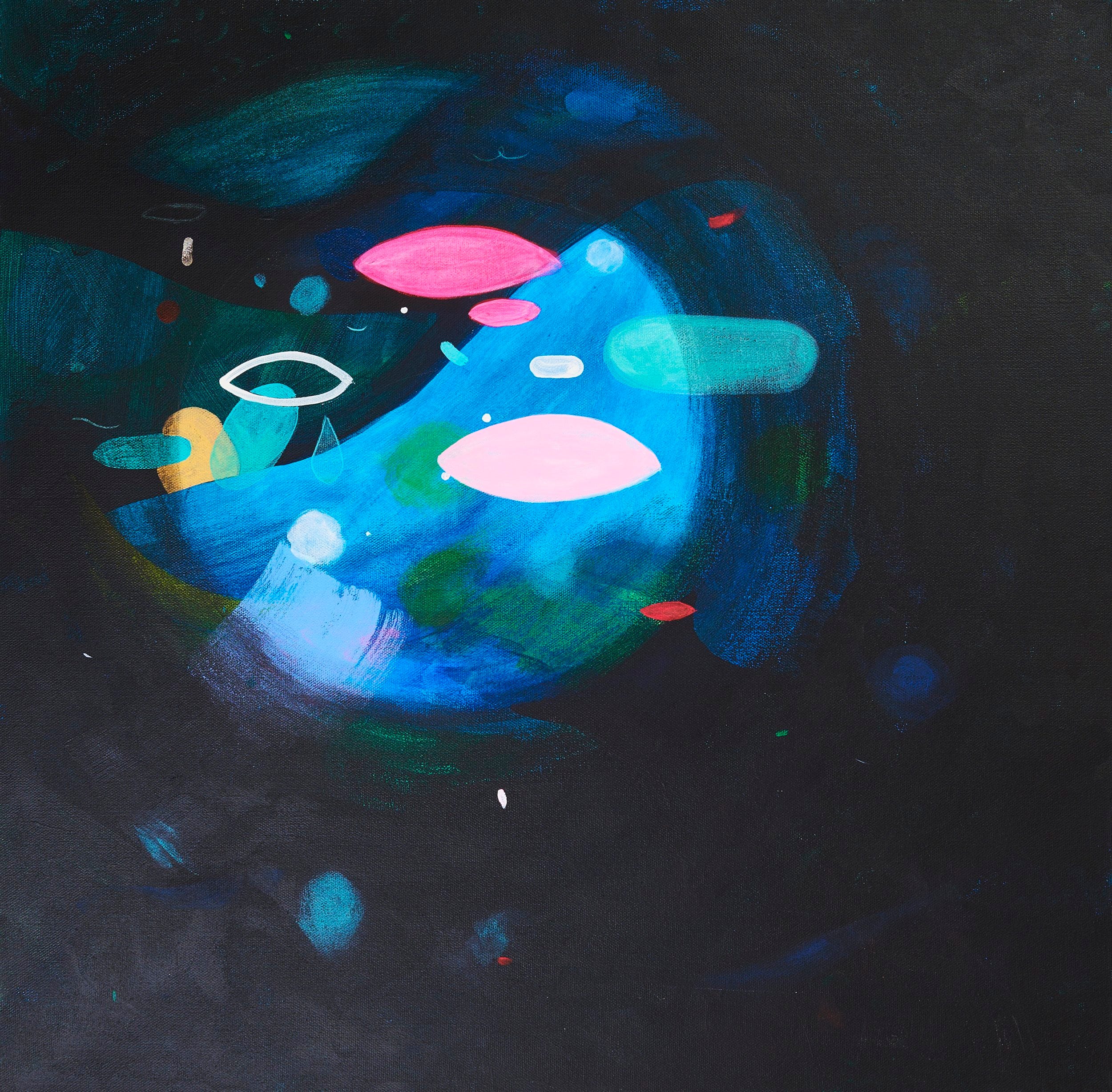
It was just after midnight, Papa’s eighth night underground, when Bilee arrived in the graveyard.
Stubby shofar tucked in her coat pocket, she passed silently through the gates declaring YÓVEL CEMETERY, surprised they weren’t locked. But as soon as she stepped on the grass, she got it. It was awful in there, such an ambience. To lock the gates would be overkill – the vibes pinging the whole plot were enough to keep the non-disturbed away. Bilee wished she could land in that category but she had promised her Papa.
She walked slowly through the jags of stone puncturing grass, finning the ground like the dorsals of undersoil sharks. Some were slanted, like cracked teeth in leering mouths. She shone her flashlight’s phone and scuttled slowly through the gigantic jaw.
Bilee approached Papa’s grave and even from twenty feet out, in the beam of her light, it looked different. Grass covered the dirt, which felt indecent, like finding an ugly wig on a teacher normally proud of his baldness. Also, in the eight nights since Papa’s burial, someone had erected a temporary headstone. Bilee could make out letters but was too far away to read them.
She paused. A noise sawed from the river. It wasn’t the water, though the roar was there, muted slightly by the pour of thick night. Or maybe just the dull terror thudding in her head. The noise rose again, quick and shrill. A loud cutting animal cry. The bray of a donkey, maybe. She listened hard, fingering the chain around her neck and the scant comfort it brought until the crier went mute.
Unfortunately, the cemetery responded. There was a snarl behind her. Three quick noises, a rahk! rahk! rahk! each closer than the previous, like the creep of a sneaking dog.
Bilee wheeled around wildly, terrified, expecting to face her menace.
But the white beam of her phone illuminated an empty graveyard behind her. No dog. No movement. Nothing. It was a relief in extreme shortness because the tombstones waved, reminding her what they cradled six feet in their bellies.
Bilee turned back to her Papa’s grave. She felt weighted by her terror, which in kinder moments of self-isolated reflection she’d call her imagination.
A light fog circled Papa’s plot, glistening and gloaming. It wasn’t there five seconds earlier.
Bilee teetered and felt the non-reality. A call in the distance, something familiar, but this one tintinnabulated more like comfort than fear. Bilee welcomed it and grew excited as it neared. The long note broke and was replaced by three short blasts. And through the fog, Bilee saw a form assemble. It rose from the corners, sky up and ground low, pieces of smog pulling in, stretching shades of night to twist and tumble in above itself. A convulsive dance, the eddy of swirl, something that was neither gas nor solid. The sound blared, right above her ear this time, in a beat of super-fast rat-tat-tat blasts.
Over it, a scud of voice. THAAAT YOUUUUUUUU SUHHHWEEEEEEETIE?
Bilee’s bowels bristled. She was bowled over to hear it.
The tirade of teruahs ended just as the form in the fog coalesced to face her. And like a king-thing descending from the third height of death to splash its face with the unworth of the low downers, it presented in the night above her.
It was Papa.
Everything sharpened. It couldn’t be. Obviously it wasn’t. And yet…
The thing masquerading as Papa hung over the air of his grave. Not as he was on Bilee’s last sighting, but as he was and had been in memory. Exactly like she thought of him throughout his life. Beard long and forehead high. Eyes bright and neck thin, forearms sinewy and ready.
The projection’s lips lowered, like a primate exposing its bone of teeth.
YOU’VE COMEEEE
Each sound like a peeler raking her skin and letting her soul seep out, exiting into the dark mind of the universe through the blood of an individual, a universe unto herself.
ÜÜÜÜÜ LASTTTTTT TIIIIIIIIIIIMEEEEEEEEE
The words continued, and Bilee’s ears heard, but her brain didn’t untangle.
NEEEEED TOOOOØOO TUURRRRNNNNNN BREEEEE AAÄÆAA YYYYAAAAAAAÄÆÀ
It sounded like Papa, but darker and muddier. Lower down to the true soil of the world, the stuff under the top blanket. Seen what’s lain on the other side of experience, gone forever the innocence.
The thing stayed in the air above, but held out a hand.
Five wriggling finger things stretched close while the rest of the nightmare stayed put. A lily white hand approaching. An impossibly long limb reaching.
Bilee’s brain sparkled and popped, cold like seltzer, but the eerie gliding approach of the hand catapulted her. She remembered the lake. Papa’s prophecy. A joke then, a life-saving truth now. She reached into her pocket and pulled out his shofar.
The hand neared, so close that Bilee saw a crack in it, a crack that let the true face under this pharaonic projection peek through. Something stout and eely, with limbs wriggling and holes widening for entrance and prance, awful in its total and complete otherness, a feeling like nothing Bilee had encountered or imagined could ever encounter her…
The hand was in front of her and like a knee kicking at the doctor’s prod, Bilee jabbed the opening of the shofar into the cracks of the form. Her inner-ear heard her Papa, her real Papa, not this perverse phantasm. A few notes at first, distant but unmistakably him, and then his words. Empty to hit the right note. She did that, tossing out her mind’s contents in a clash of confidence as best as she could before inflating her lungs with air, and then she blew, blew like the true scion of the longtime baal tekiyah of Temple Dark HaMolech .
The fog swirled around her and there was a scream, loud and then faint, a rush of wind, the cry of a baby and the responding murmur of a woman. A shadow reflected, three big letters, giant fiery shapes that sounded a scale familiar and unknown, but still Bilee held.
She blew and blew, freeing herself and the tethered, longer and harder than she had ever heard anyone go at it, even longer than Papa when he went for his world record tekiya gedolahs.
A lifetime later, Bilee lowered her shofar.
The fog was dissipating. The form was gone.
It was nearly daylight. Bilee’s throat felt impossibly parched. She read her Papa’s name on the slat of stone in front of her and rose to her feet.
Swaying for a moment but then steadying herself amid a tearing open within, Bilee Baynoni walked slowly through the mouth of the lightening graveyard, hand-in-hand with the ascendant projection horning alive within her, trying to still the pounding in her temple that matched the curling bone in her hand.
Originally written Summer 2022. Dedicated to Suri Lichtschein, a’h.
This piece really made me think about how we proces loss, and how stories can become a kind of legacy. It's almost unsettling how vivid imagination can make things we never experienced real, yet I'm so open to the power in that. Your way of exploring your grandmother's life and the shadows that never learned your name is truely insightful.