

the men digging for the messiah
tunnels under 770 + the most replicated building in the world


i. the tunnels under the temple
on the afternoon of january 8, 2024, a cement truck pulled up to 770 eastern parkway in crown heights, brooklyn. the building, a red-brick structure with a three-peaked roofline, is the world headquarters of the chabad-lubavitch movement and contains a synagogue, study hall, a large gathering space, and offices.
the concrete mixers were there to fill in a tunnel — a narrow, hand-dug passageway that ran from the synagogue’s main sanctuary to a nearby disused mikvah.
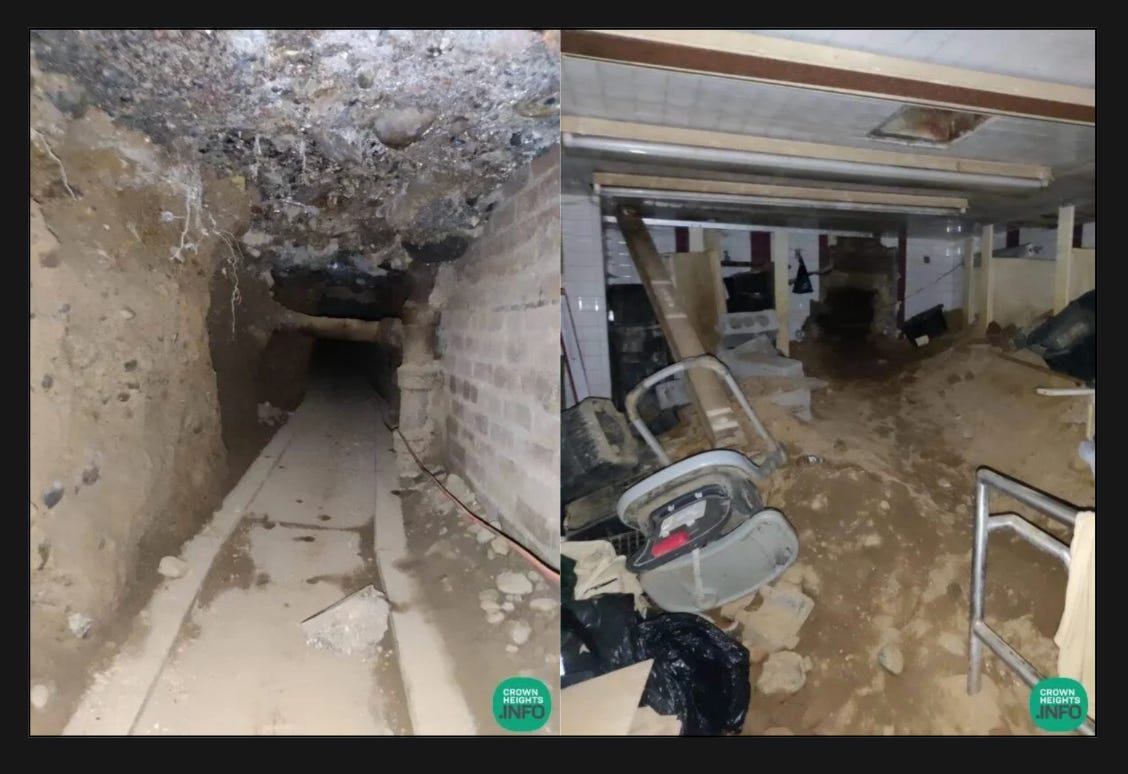
the tunnel was discovered weeks earlier, after a neighbor complained of sounds behind his walls.
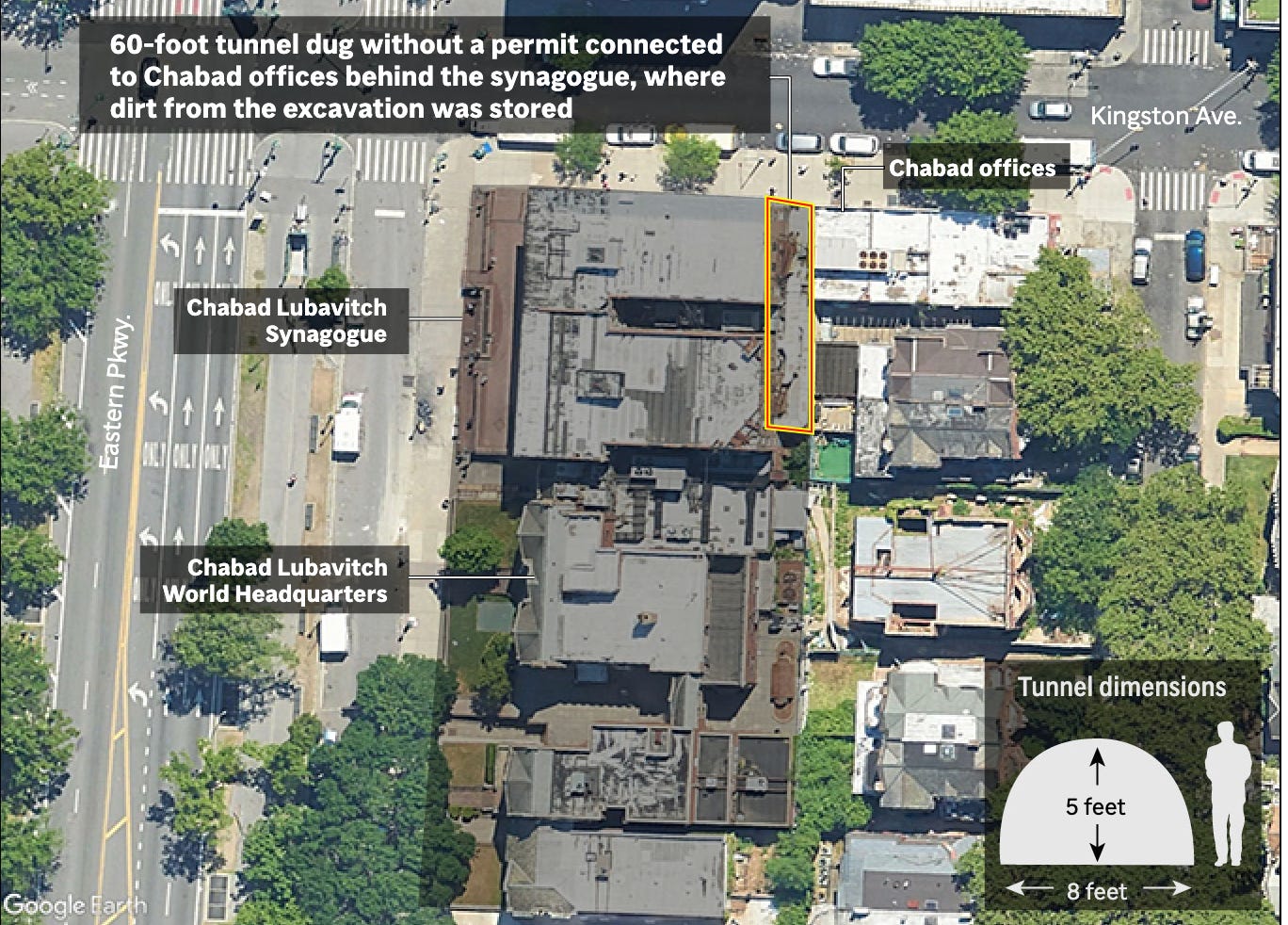
located at the back of the large sanctuary on the ground floor, the tunnel was approximately 60 feet long, 8 feet wide, and 5 feet high. it connected the basement of 770, as the building is commonly known, to adjacent properties at 784 and 786 eastern parkway.
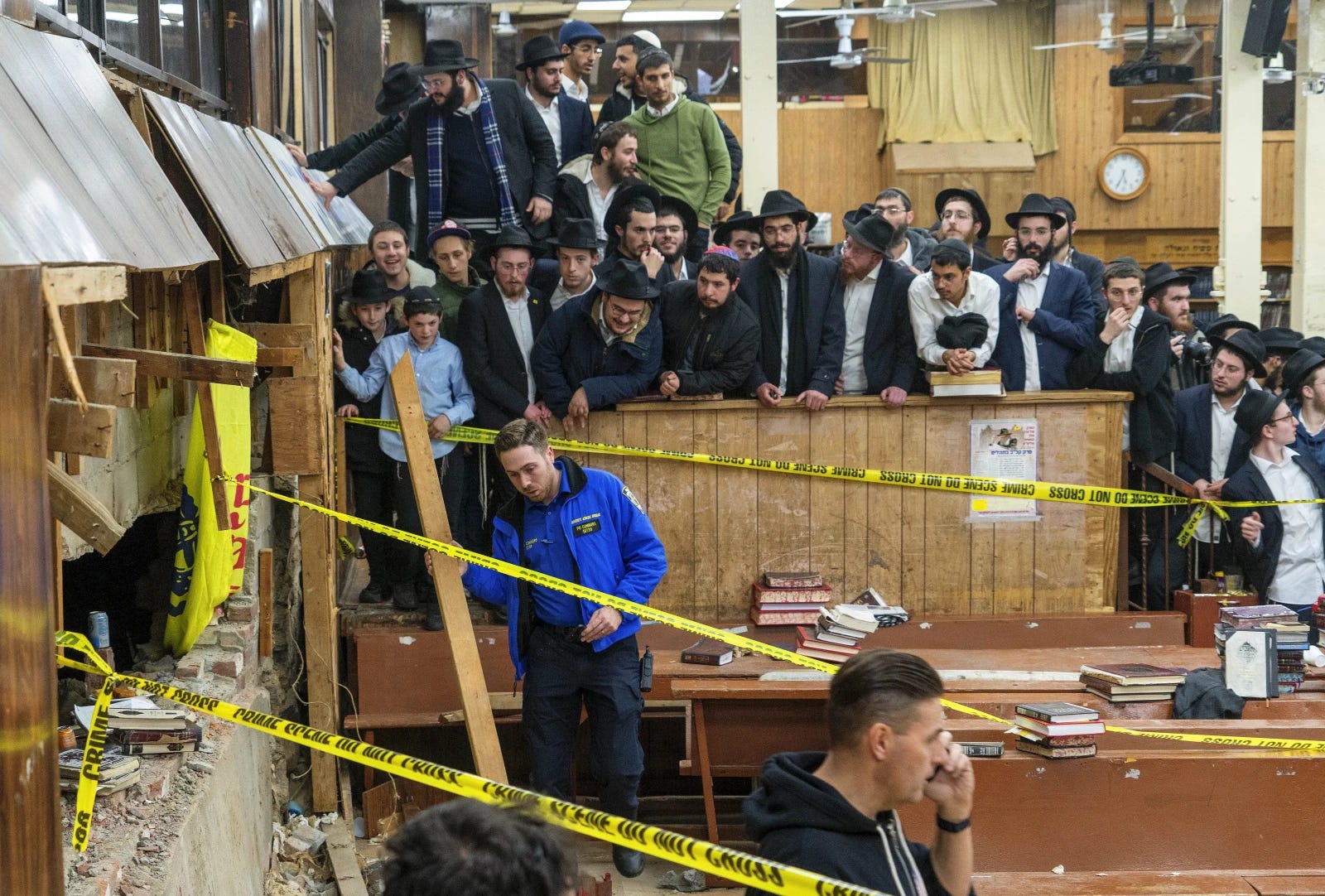
what happened next was captured on dozens of phones and uploaded in minutes: a group of young hasidic men, aware that the tunnel was about to be sealed, broke through an interior wall of the sanctuary from inside the passage itself.
one of them, caked in dust, emerged to cheers. others dragged benches across the floor to try to block nypd officers from entering.
by the time the night was over, nine people were under arrest, wooden panels were pried from the walls, and a police officer had deployed some kind of spray to disperse the crowd. the department of buildings temporarily closed 770 pending a structural review, concerned about the stability of buildings around the complex. and finally, at long last, the workers were able to unload their cement truck and begin pouring concrete into the passage.
shortly afterward, chabad lubavitch released an official statement.


who were these “young agitators”? what did they want?
it’s a bit roundabout, but to get there i want to first detour into my past.
ii. the forbidden minyan
exactly half my lifetime ago, i was nineteen years old and studying in a yeshiva in israel. most of our time was spent poring over the talmud in a square room with a powerful air conditioner and glass windows facing the desert, god’s law recited back to him, but there were parts of the experience that were extra-scholarly. we went on a bunch of trips throughout the country, hiking a lot but also visiting historical cities and jewish holy sites.
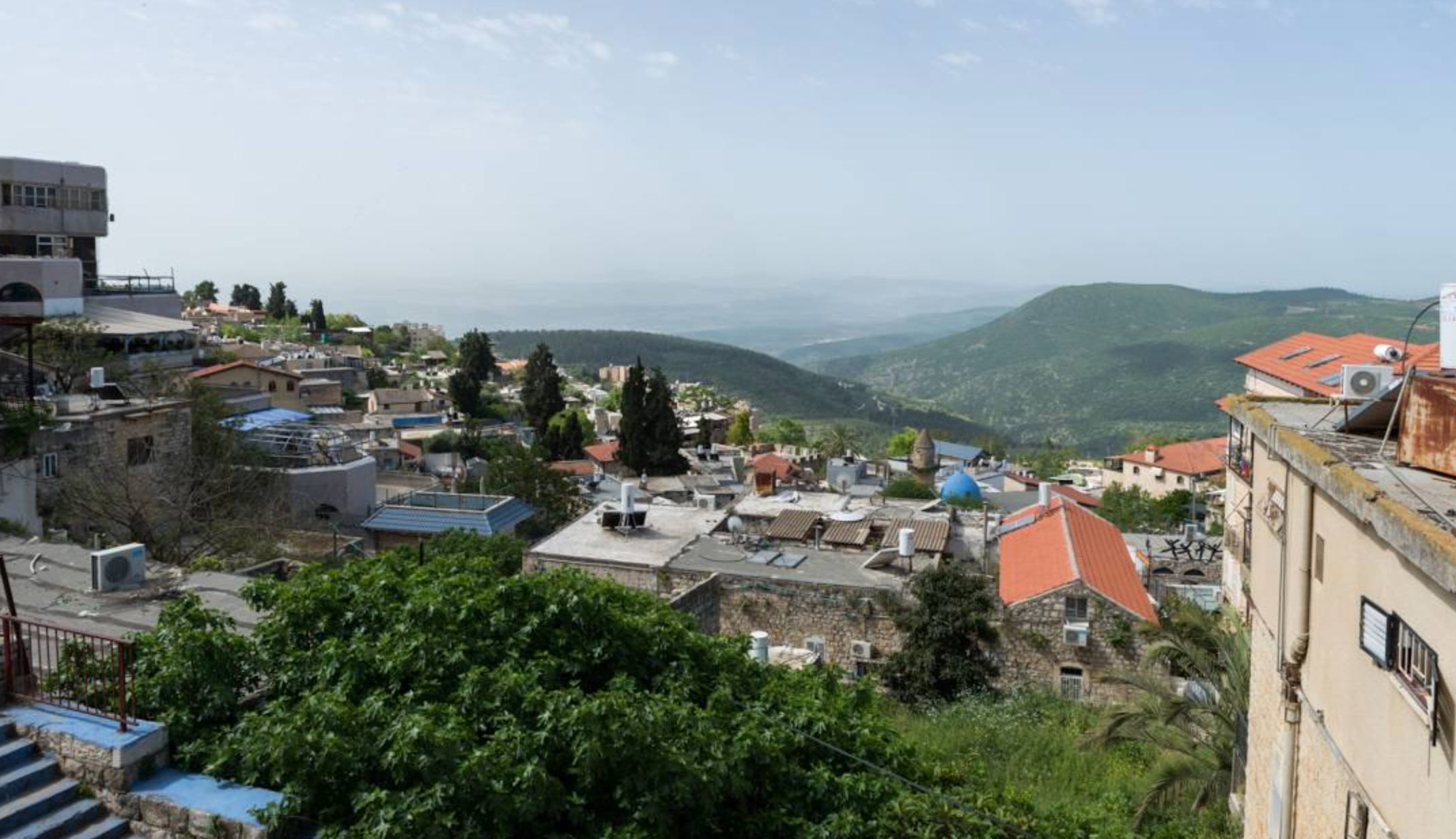
on a trip to the mystical town of tzfat, which attracts spiritualists, artists, hippies, and general religious weirdos, it was late afternoon, and we still hadn’t davened mincha. with the clock ticking to sundown, we ducked into a small synagogue.
there were probably thirty of us, plus three counselors and two rabbis who were chaperoning.
i liked one of the rabbis. his name was rabbi aftel and he was a big dude with a large belly and an even larger beard. he taught halacha, or jewish law, and his class stood out because he was funny and a good teacher, but also a spiritual guy who was still tethered to this world. kind of a model for how to be.
we settled and found prayer books on the shelves. a local guy with a beard and a hat welcomed us, smiling widely. he took his place at the shtender in the front and started to pray. we joined in, reciting psalm 84, soaking in the ambience of holiness. after finishing ashrei, the local said the kaddish and we rose. the room devolved into silence as we all stepped into the amidah, the prayer that can bring you face-to-face with the creator when the intentions are right.
but unlike every mincha we prayed in yeshiva, one of our rabbis interrupted.
“stop davening,” rabbi aftel said sharply. he was talking to us, his students. “everyone, stop davening. right now. we have to leave. immediately.” his eyes were on the man at the front of the room, who was deep in prayer, unaware of the disturbance behind him.
we listened to rabbi aftel, even though it was unheard to disrupt the amidah.
once we were all outside, rabbi aftel huddled us on the street. “the man leading those prayers was a meshichist,” he said. “did you see his tallis? he had yechi woven into the collar, and i saw the yellow patch on his bag. he’s a meshichist. we don’t daven with meshichists.”
that was the only explanation he gave. the sun was sinking and we still hadn’t prayed, so we walked a few blocks down until we found a lot on the side of the street and davened there as cars rumbled past. it was better, according to rabbi aftel, than praying with a meshichist.

what is a meshichist and why are they so “dangerous”?
it’s a bit roundabout, but to get there we have to first detour into the history of chabad.
iii. believers in a false messiah
chabad (also known as chabad-lubavitch) is one of the largest and best-known branches of hasidic judaism. hasidic judaism is a movement that emerged in 18th-century eastern europe. it was founded by the baal shem tov, a mystic of the people who started sharing his esoteric teachings at age forty. he emphasized joy and an accessible spirituality, and after his death, his followers kept his ideas alive. each brought their own flare to disseminating his teachings, leading to the formation of new schools of thought, each with a “rebbe,” or leader slash main teacher. the rebbe’s followers were called “hasidim,” which literally means “pious ones.” these groups were mostly named for where their founders were from: levi yitzchak of berditchov led the berditchovers, nachman of breslov led the breslovers, and so on.
chabad-lubavitch was founded in 1775 by rabbi schneur zalman from the town of liadi in belarus. rabbi schneur zalman, or “the alter rebbe1” as he came to be known, distinguished his sect by stressing intellectual engagement with mystical ideas. the name “chabad” is an acronym for the hebrew words for wisdom (chochmah), understanding (bina), and knowledge (da’at). each one has a different meaning and function in mystical jewish thought. the movement really gained its footing with the next rebbe, “the mittler rebbe,”2 who relocated the community to the town of lubavitch in western russia.
over its history, chabad-lubavitch has been led by a succession of seven rebbes. the last one, rabbi menachem mendel schneerson, known as “the rebbe,”3 died in 1994 without children or having named a successor.
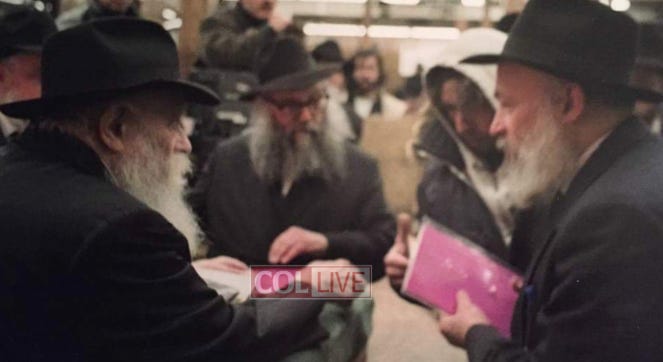
cue the succession struggles.
only not really. chabad never experienced a schism similar to satmar’s split into two camps of the reb aharons and reb zalmans, the two children of its last widely accepted leader, but the question of who follows the rebbe has shaped chabad for more than three decades.
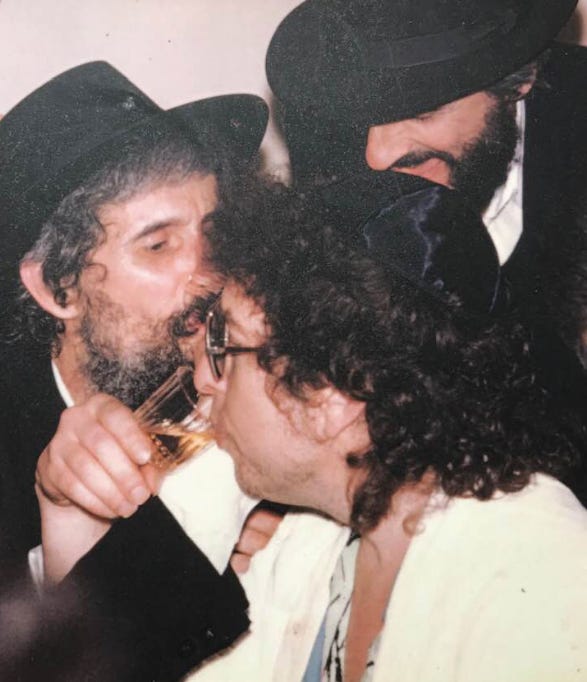
chabad is a huge net positive for jewish life, whether or not you’re hasidic. as a jew, pretty much everywhere you travel in the world,4 you’ll find a chabad house eager to welcome you with a meal, a bed, some schnapps, and a word of torah.
chabad guys are also very into in-sect proselytizing. they are the ones who will famously stop you on the streets of new york to ask, “excuse me, are you jewish?” which if you respond yes, they’ll take as a cue to try to get you to wrap tefillin or say a bracha or take candles home to light for shabbos. this comes directly from the rebbe, who believed that enabling other jews to perform a mitzvah is a jew’s central purpose. to bring others closer to god. and to heal the world. because even the smallest deed, the rebbe taught, can bring about the moshiach.
and that’s one of chabad’s main preoccupations: hastening the arrival of the jewish messiah.
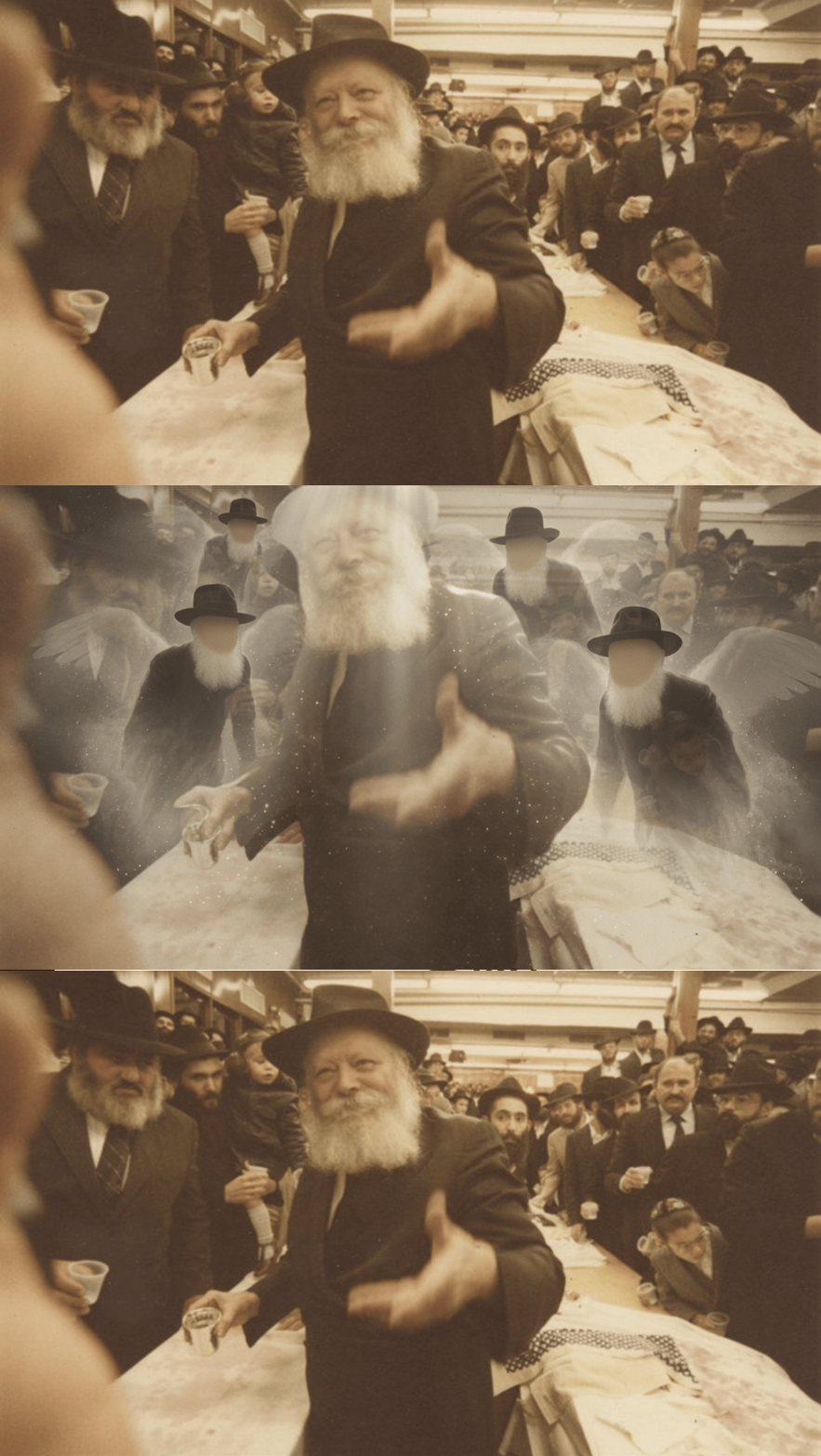
during his lifetime, many jews thought the rebbe could be moshiach. he was certainly a contender, but there are specific things moshiach must do — such as fight the wars of god (gog and magog), rebuild the holy temple in jerusalem, and restore the sanhedrin — and when the rebbe died without fulfilling any of them, his candidacy for spiritual leader of the world5 died too.
except, of course, some still believed. this is a common theme in jewish history, of jews (and others) claiming a charismatic rabbi with transcendent teachings to be moshiach. see shabtai zvi, or jacob frank, or shimon bar kochba. or most famously and consequentially, jesus of nazareth.
meshichists are the modern form of these people, those who believe their teacher is moshiach, alive and well and not buried in the ohel6.
but to wrongfully elevate someone to messianic status is a heresy in judaism.
it’s why a devout rabbi will interrupt sacred prayers to usher out his students like the building is on fire.
it’s why a yellow flag bearing the word “moshiach” can provoke immediate suspicion in orthodox circles.
and it’s why “young agitators” will tunnel under a building in brooklyn to gain access to their late rebbe’s private prayer room.
yellow messianic flags bearing the word “yechi” (which means “long live”) were seen prominently in the videos of the tunnels and many of those arrested were involved in the radical “tzfatim”7 faction of chabad, which is strongly associated with meshichism.
this makes sense. messianic believers will often destroy in order to “rebuild.” that’s kind of the entire messianic idea for this world.
the rebbe, although not moshiach and most definitely dead, has an interesting afterlife in new york. iconography of him is everywhere, spread by his meshichist followers.
this was literally the view from the window of my last manhattan apartment.
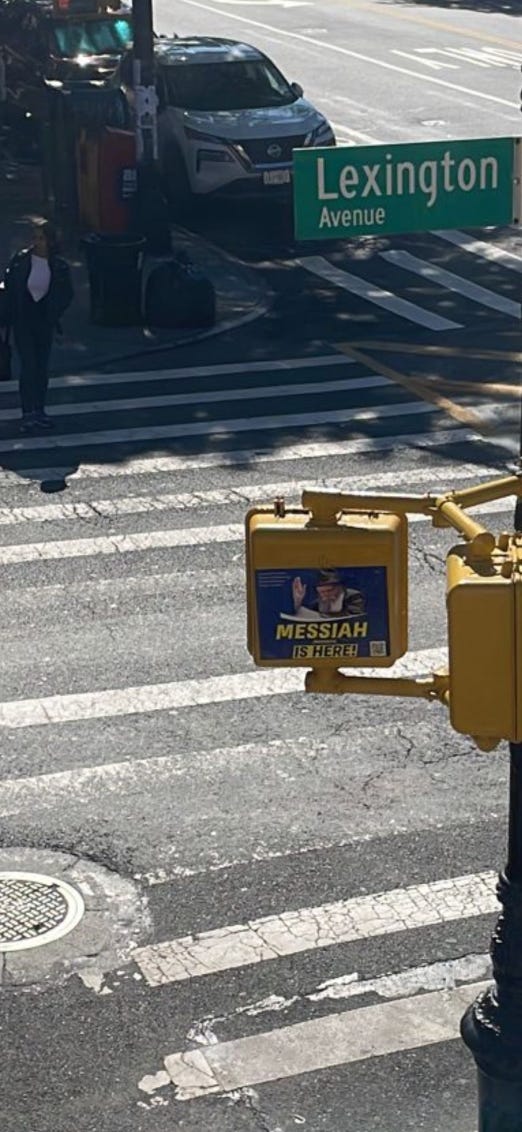
here’s a closer look.
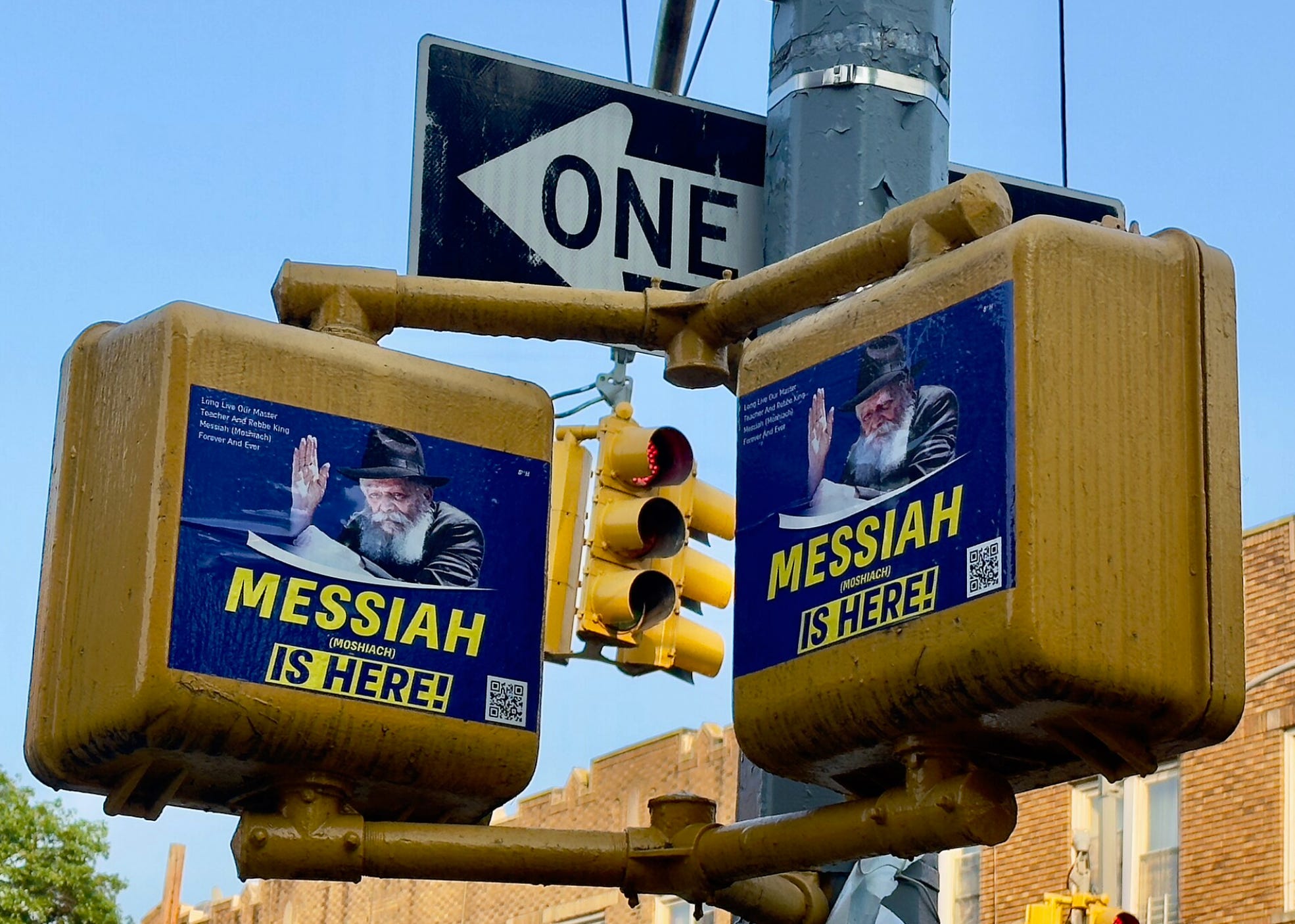
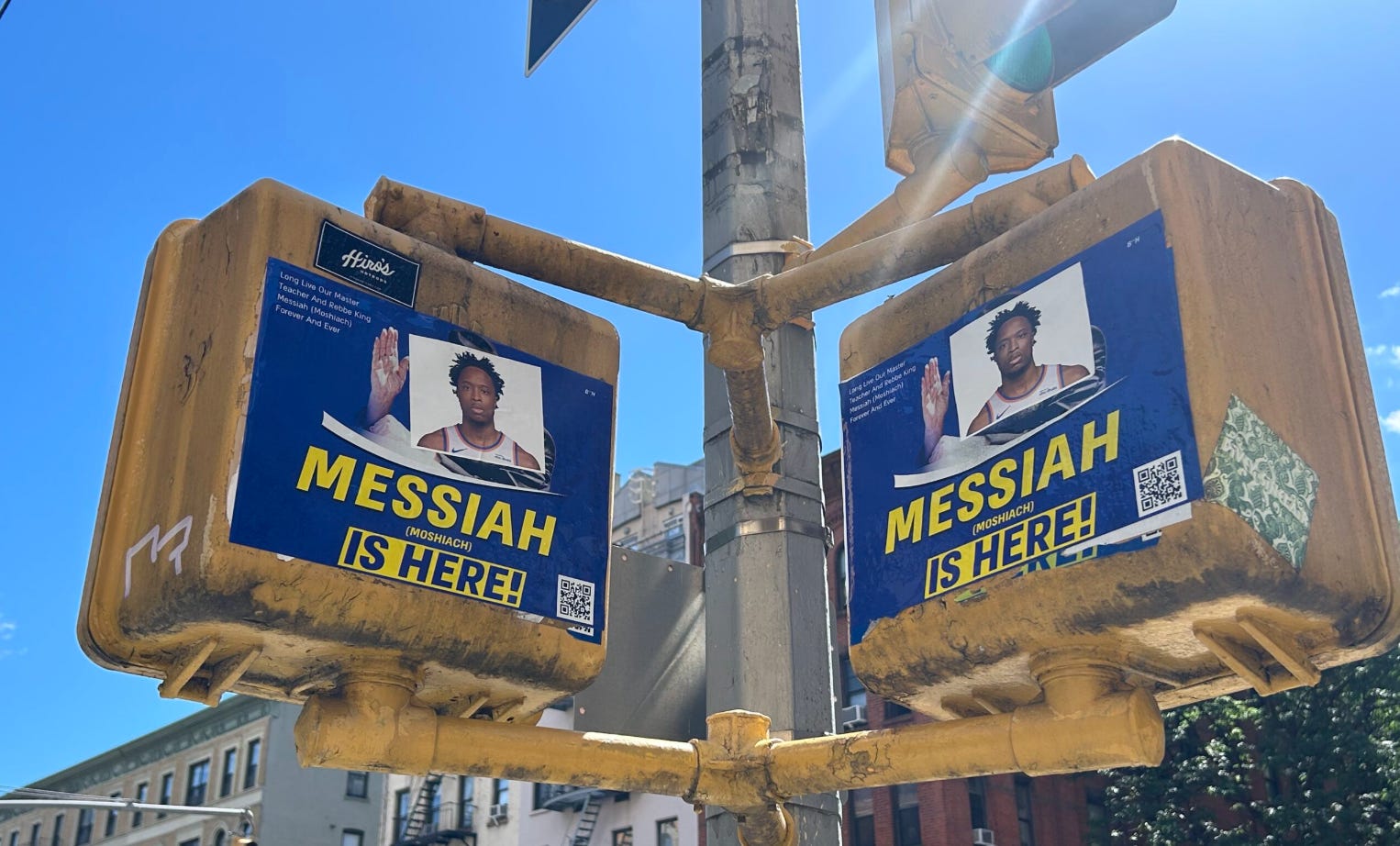
this image has become a meme in a way. especially after the knicks won.
here’s og anunoby as the rebbe-messiah.
and jalen brunson.
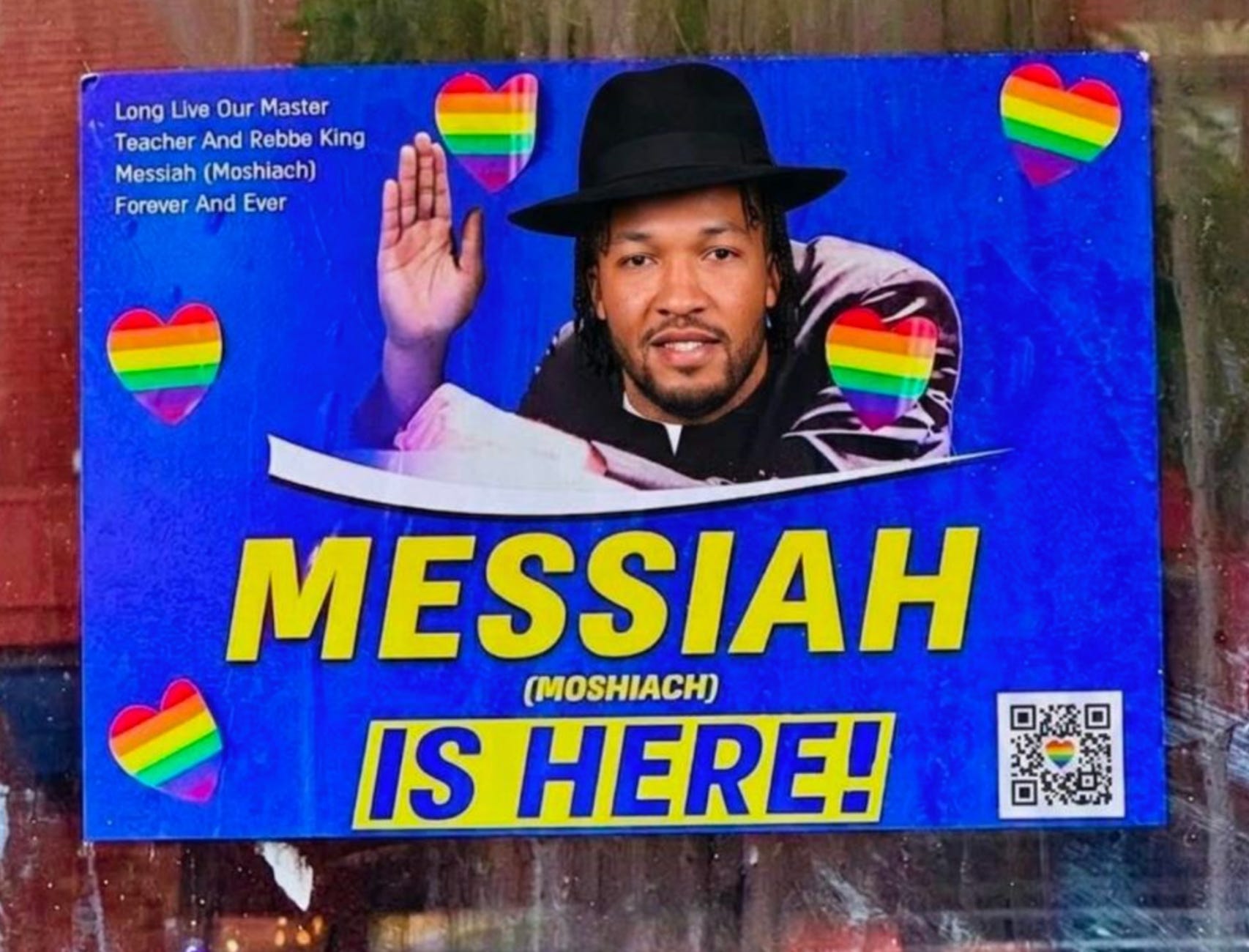
new yorkers are crazy. i love them.
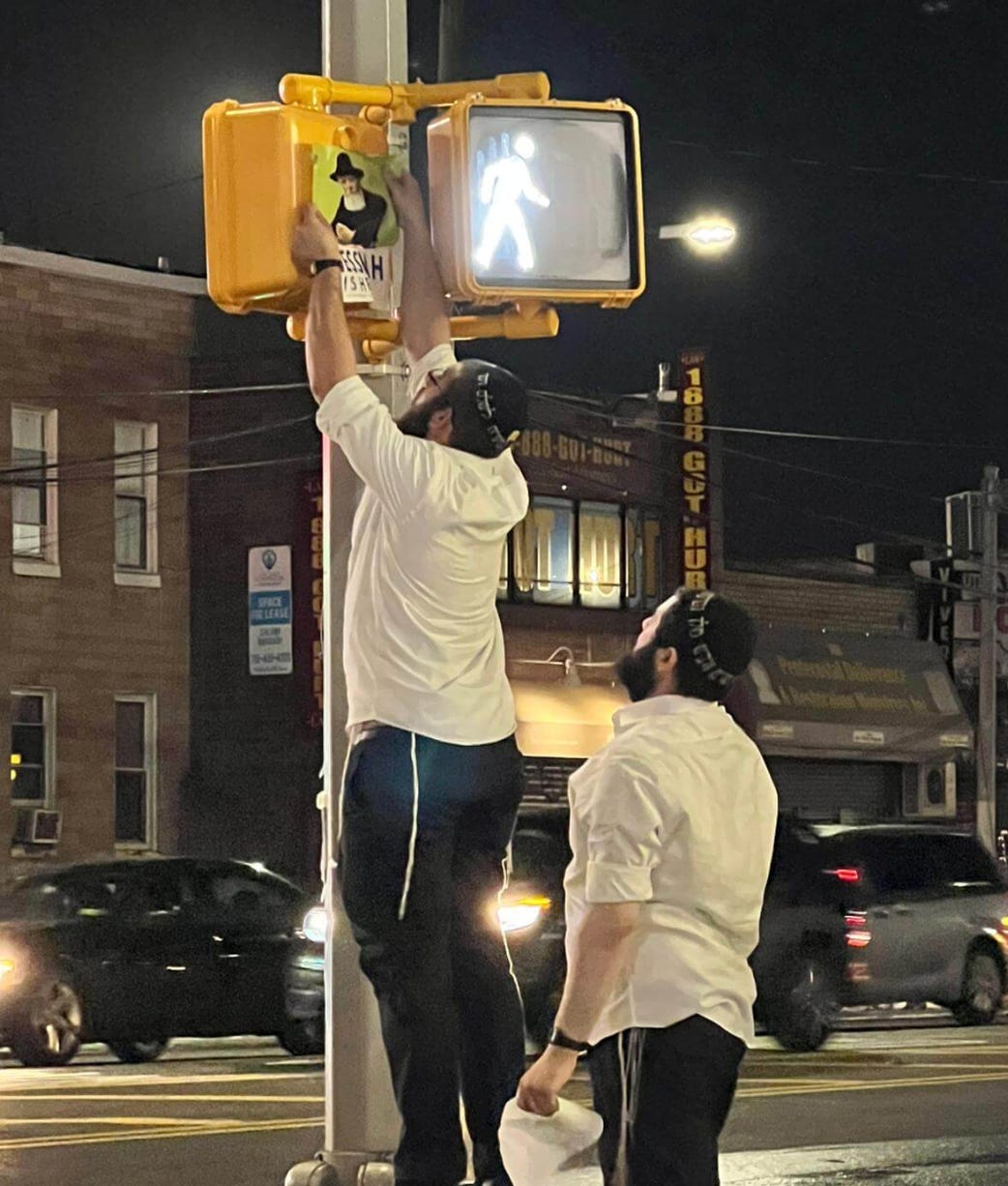
these are some of the guys who put them up.
in the years since his death, the rebbe and his legacy have become inseparable from the building where he held court.
what is it about 770?
to explain that, i want to show you some pictures.
iv. the most replicated building in the world
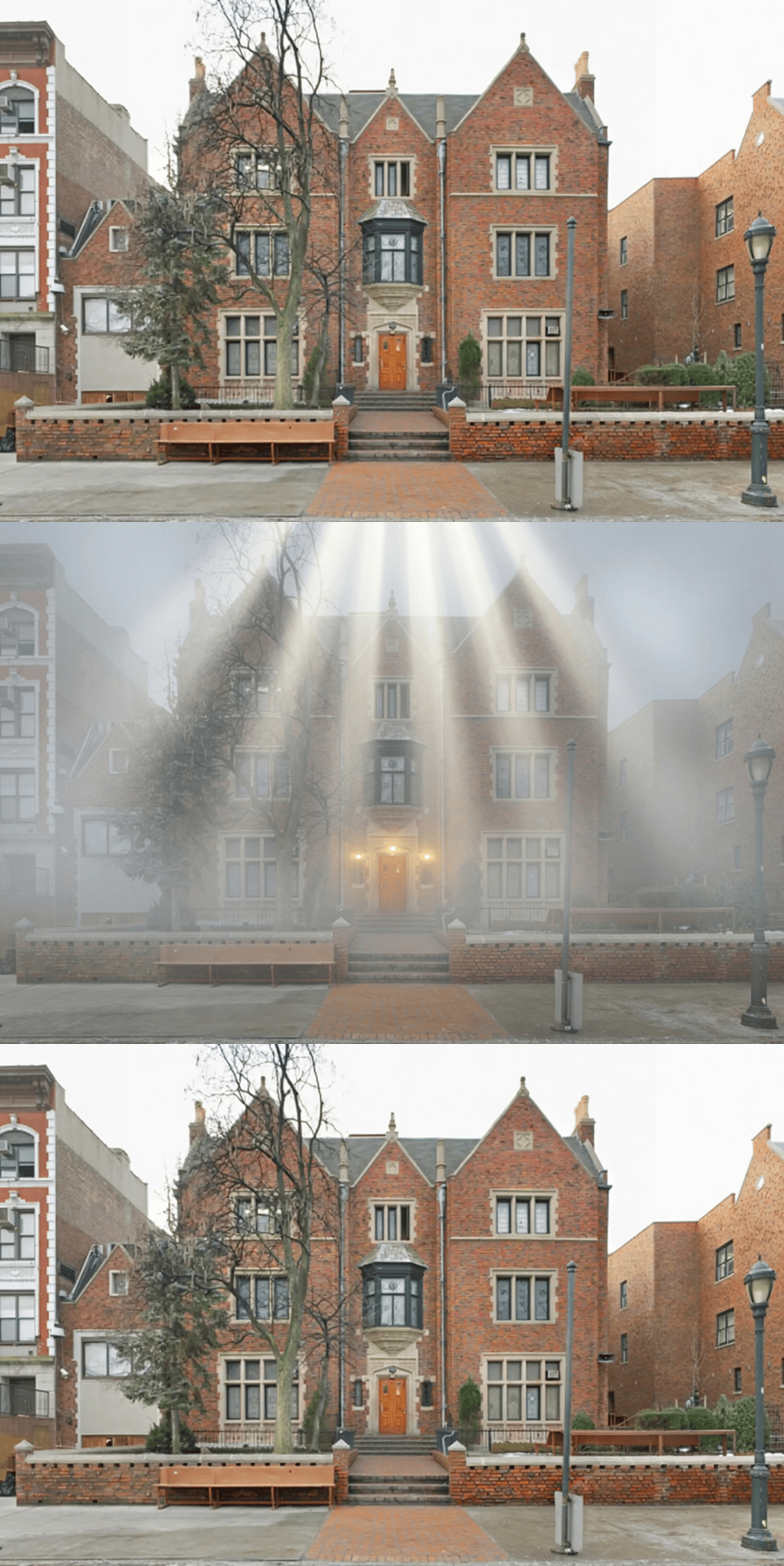
a fascinating facet of chabad is that 770 eastern parkway is, improbably, the most copied building on the planet. at least 55 versions of it exist across the globe, all of them functional and inhabitable.
the original 770 was built in 1920. at first, it was a medical office, but by the 1940s, a contingent of chabad hasidim purchased it for the rebbe and his predecessor8, who had relocated to america from poland after the invasion of the nazis. over the next five decades, the rebbe would spend most of his time inside 770, praying and studying and teaching and meeting with all kinds of people, including followers, celebrities, and world leaders — but also just anyone who sought his advice — and the building became an icon for him and his movement.
here’s the original 770. it sits at 770 eastern parkway in crown heights, brooklyn.
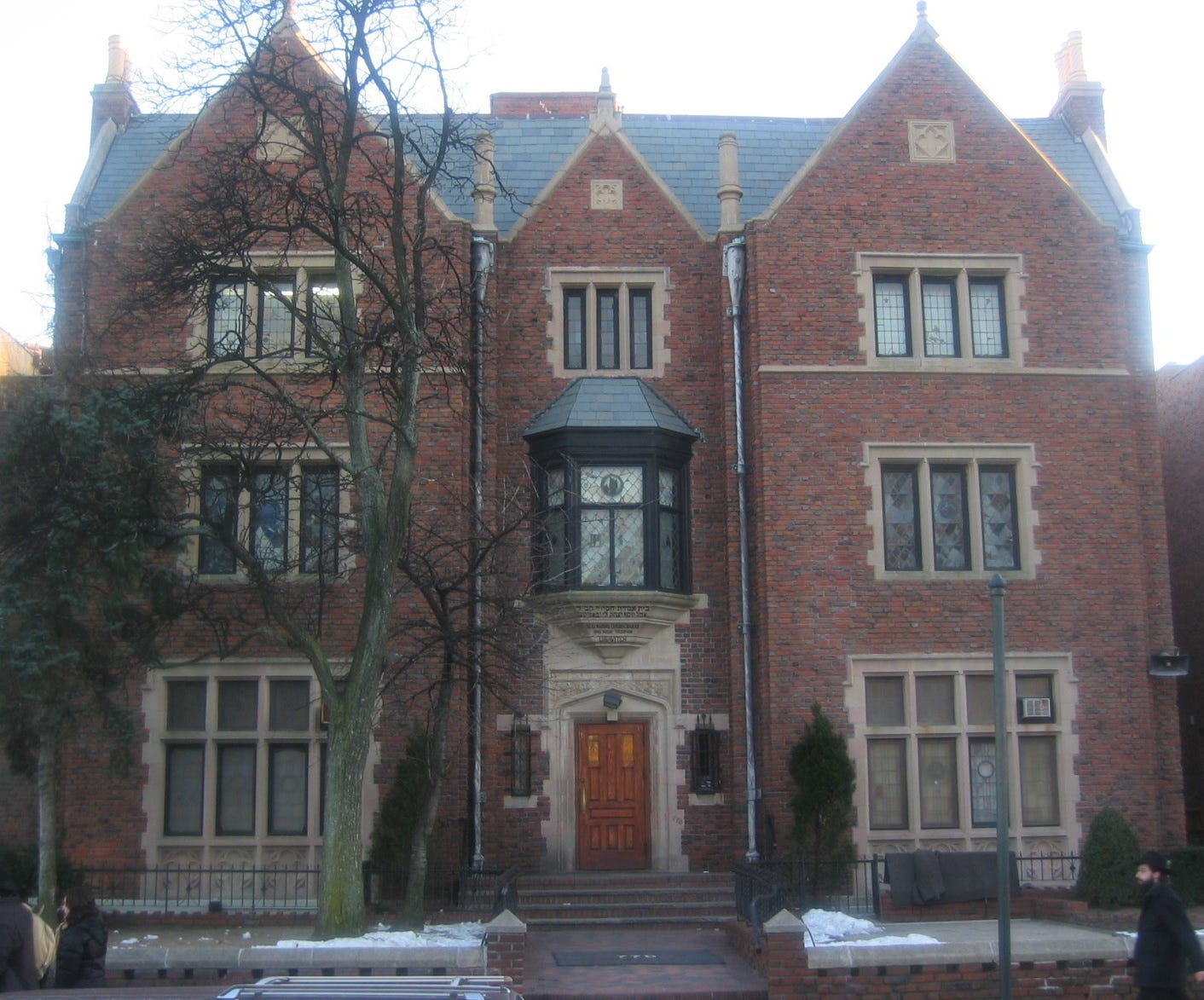
you can also see it on google maps.
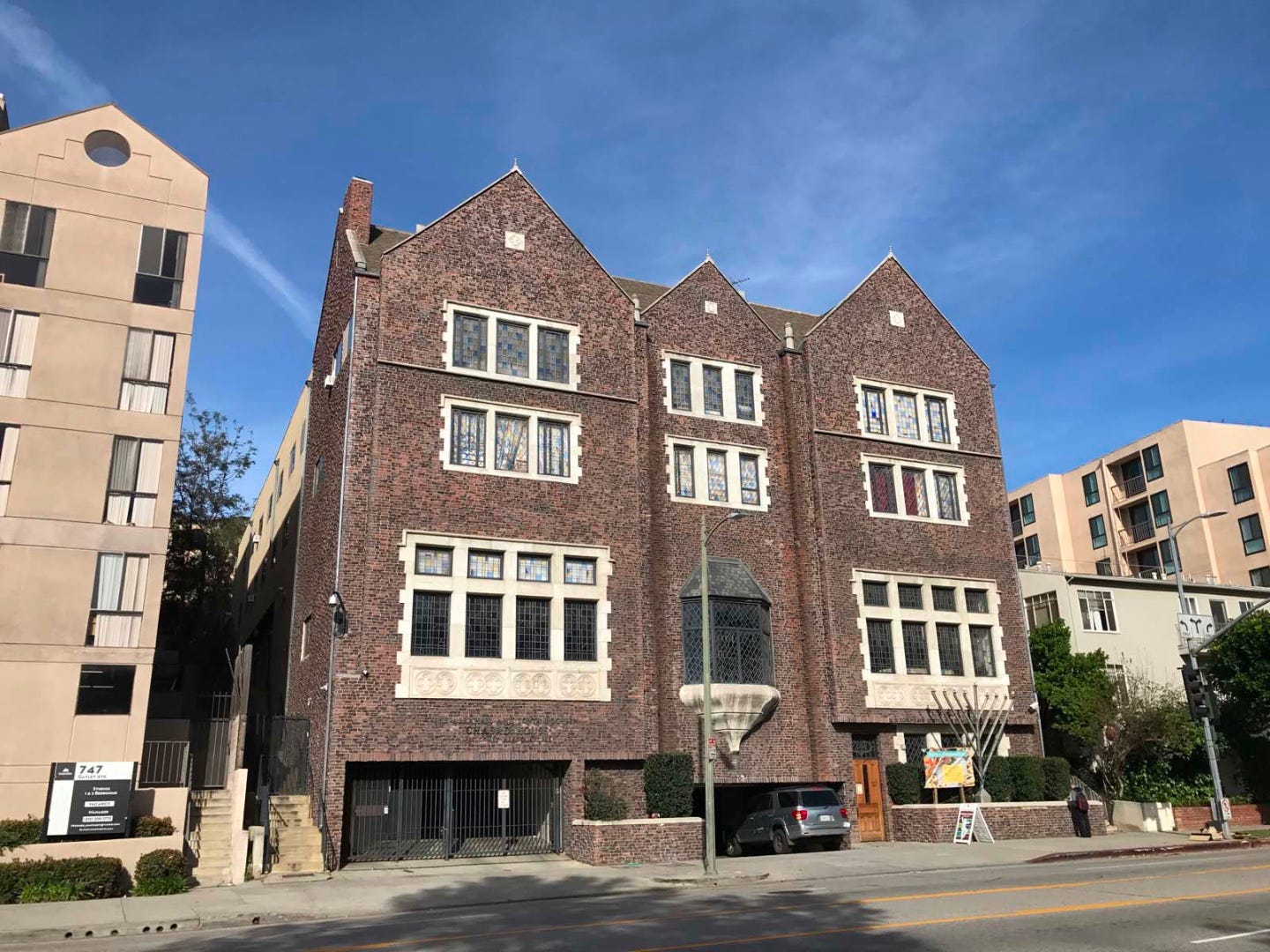
here’s one of the first ever replicas, in los angeles.
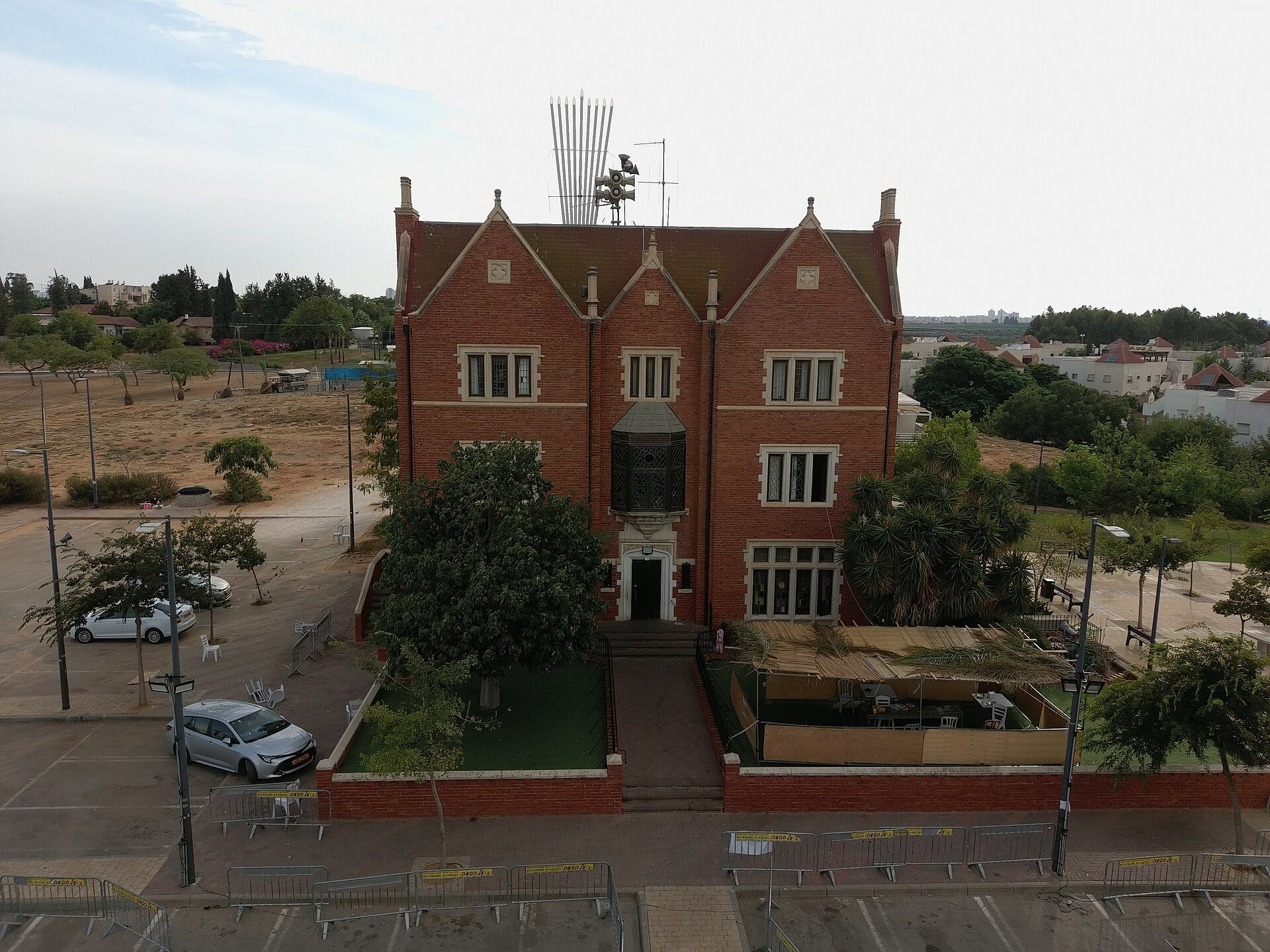
here’s the same building in central israel.
here it is los angeles again, this time in beverlywood. for this one, they stretched the 770 façade across an entire block.
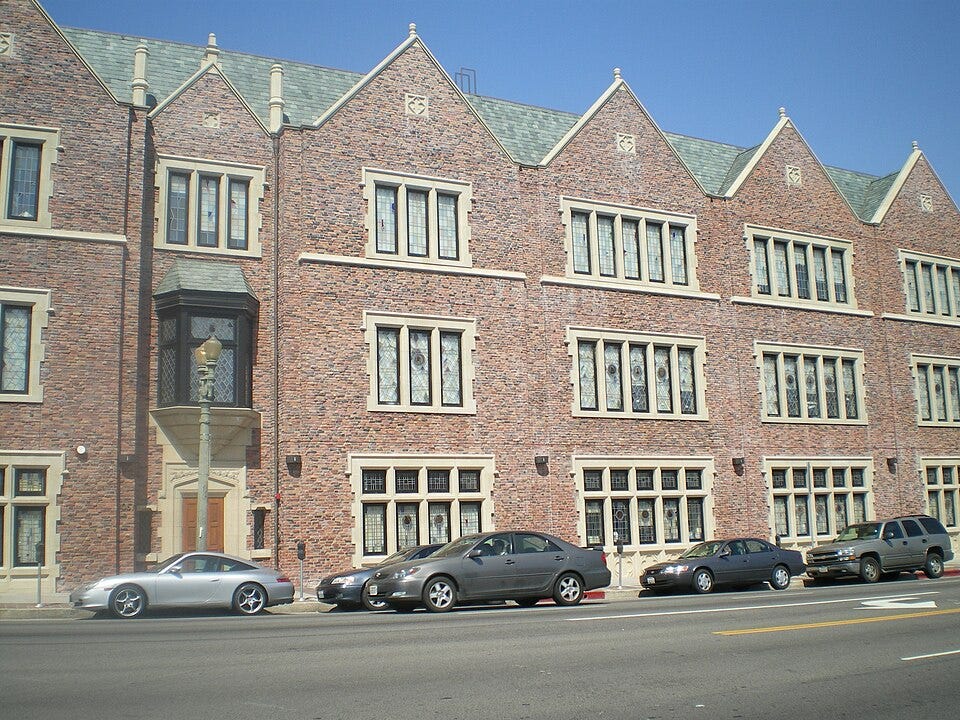
here’s one in melbourne, australia.
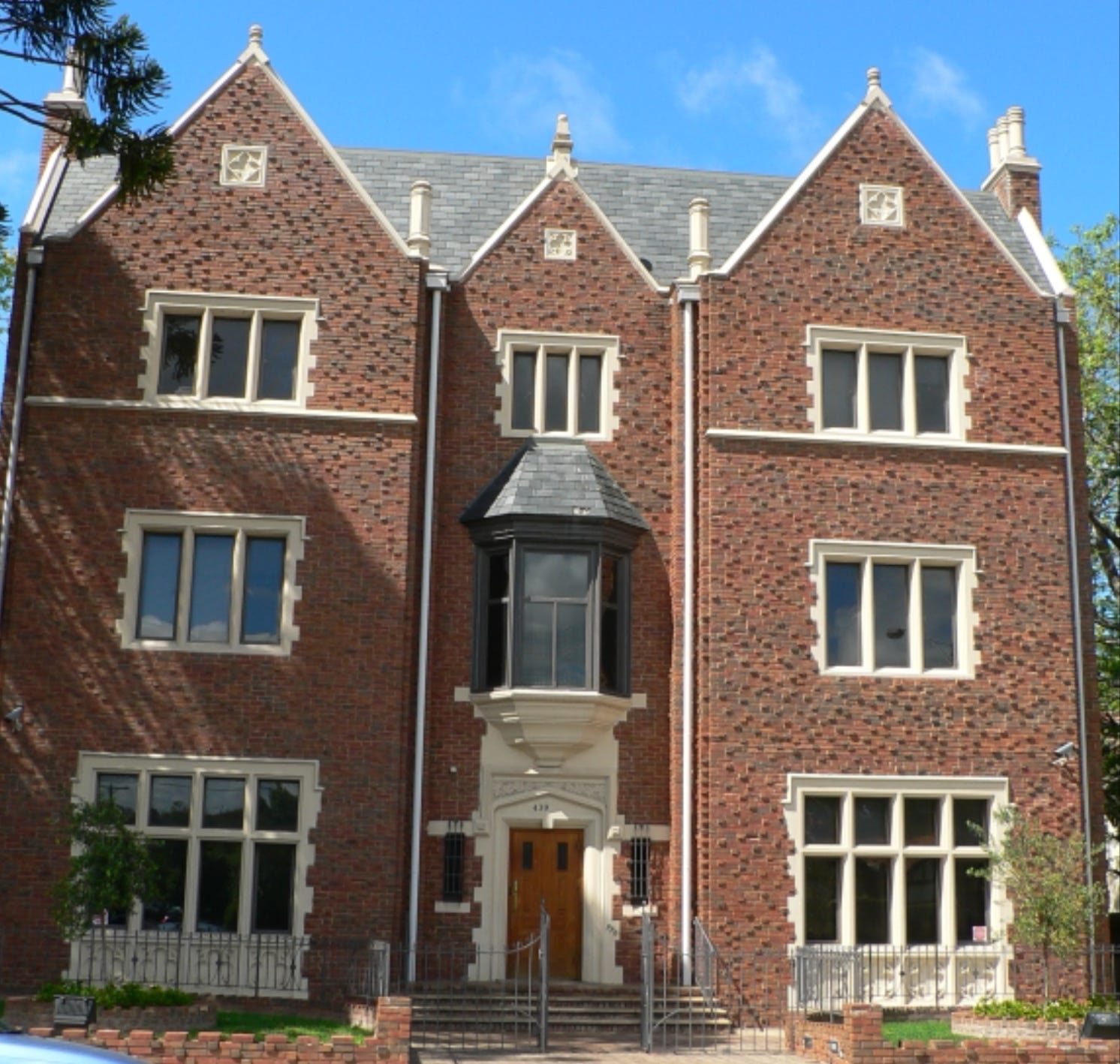
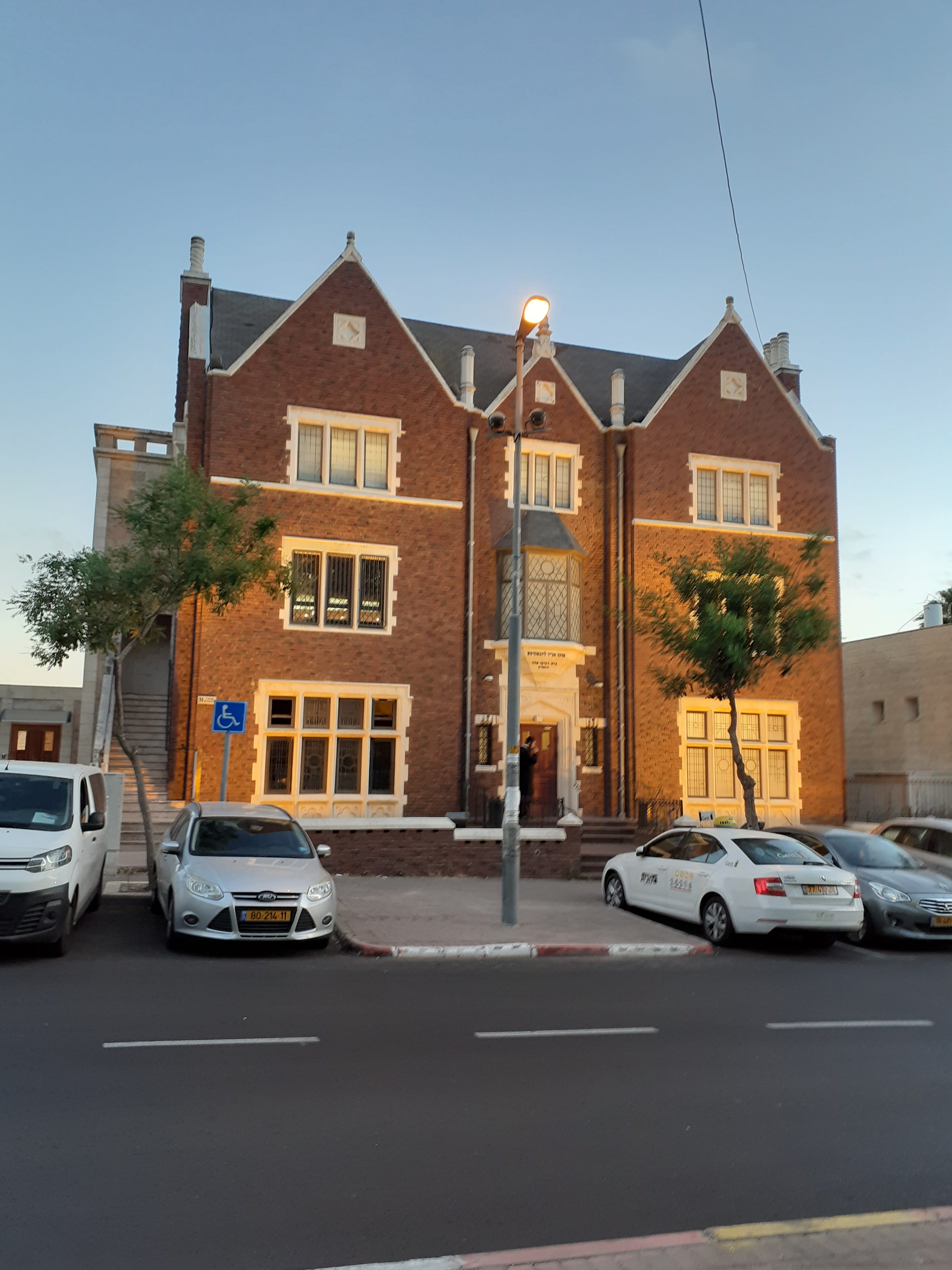
and a 770 in jerusalem.
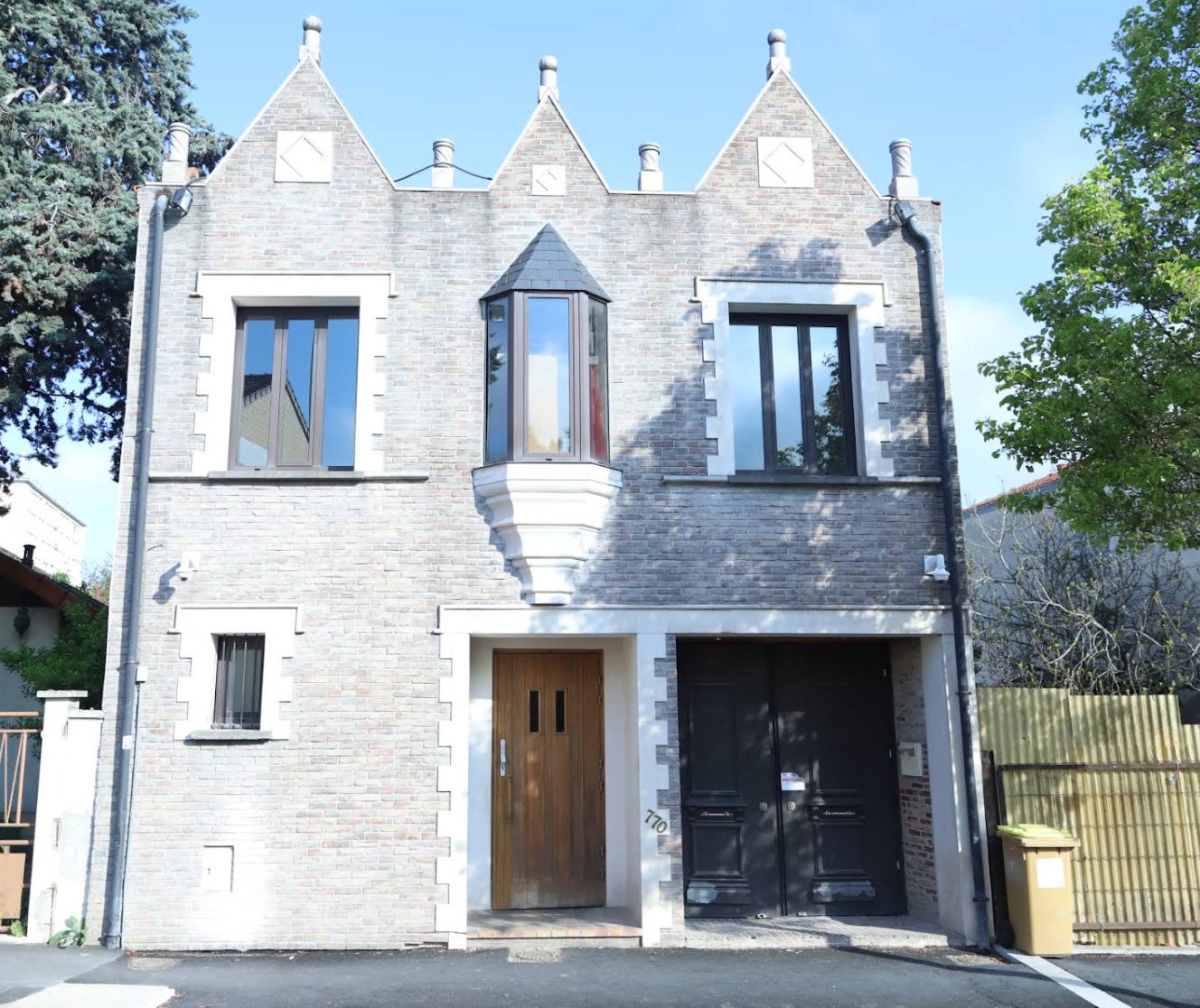
here’s an unpainted one in romainville, france. this is the smallest known 770 replica in existence.
there are more. a lot more. you can scope the rest of them here.
why are there so many copies of this building?
they seem to be a totem for the rebbe, and his followers really try to imitate him and farm his vibe wherever they set up shop. when the rebbe was alive, people visited 770 from all over the world to seek his advice and blessing.
near the end of his life, the rebbe expressed an interest to visit israel, but the trip never materialized due to his poor health. still, after his announcement, his followers decided to build a house for him in jerusalem, just in case he did visit. they modeled the structure on 770.
this started a domino effect of copy and pasting the same building all over the world.
of course, there’s a meshichist version why 770 exists all over. it’s way more uncanny.
simply put, it’s the idea that the rebbe, or melech moshiach (messiah king), will return, but since we don’t know where (or when or how, even), it’s important to prepare many different locations for his return.
the rebbe’s home was 770 and presumably he’ll want to live there when he returns. that’s why they’re everywhere. it gives credence to the idea that a small, stooped man with a black hat and white beard might appear one morning in los angles or melbourne or the phillipines, and when he does, he will be welcomed like the king he is into the palace he ruled. 770.
v. so? nu?? vat about the tunnels?
online sleuths will point all over the conspiracy board to the real meaning and intent of the tunnels: they’re evidence of a secret nefarious cult, they uncover a hidden trafficking ring, they’re an underground chamber for occult rites. none of these stand up to scrutiny.
the reason for them is much simpler and mundane, even if it was driven largely by meshichists, who also don’t really stand up to scrutiny.
near the end of his life, in addition to expressing an interest to visit israel, the rebbe also said that he supported an expansion to 770.
and that’s pretty much what it was. meshichists take the rebbe’s word as law, and in this case, they used it as a justification to dig under a sacred building in late 2023 to try to carry out his wishes.
what fascinates me most is that the tunnel itself is almost redundant. chabad meshichists already lives underground in a metaphorical sense, running on channels excavated decades ago by warped versions of the rebbe’s teachings and expectations.
his image on a yellow banner hangs inside synagogues in mystical towns. his house is replicated across continents. his followers still debate what he meant, what he wanted, and whether he is truly gone at all. and for a few hours in january 2024, the hidden architecture of a religious movement burst through a wall in brooklyn, covered in dust and blinking in the light.

did you enjoy this piece? please consider subscribing to biblically accurate aliens, my newsletter where I write about topics like this but also about aliens, cults, Epstein, and mysticism.
if you liked this post, you might also like this one :
Leslie Wexner's Lifelong Dybbuk

“On the morning Leslie Wexner became a billionaire, he woke up worried, but this was not unusual. He always wakes up worried because of his dybbuk, which pokes and prods and gives him the itchiness of the soul that he calls shpilkes [“pins” in Yiddish]. Sometimes he runs away from it on the roads of Columbus, or drives away from it in one of his Porsche…
and this one, too:

thanks for reading! if you enjoyed this, please consider leaving a like or comment below. and if you're really enjoying what i'm building here, why not upgrade your subscription? it helps make all this sustainable. i'd love to spend every day chasing strange stories and sharing the best ones with you. every bit of support helps spread the weird word.
which translates to “the elder rebbe”
which translates to “the middle rebbe”
which translates to “the rebbe”
where outwardly identifiable jews are welcome, that is
slash human leader of its divine rededication
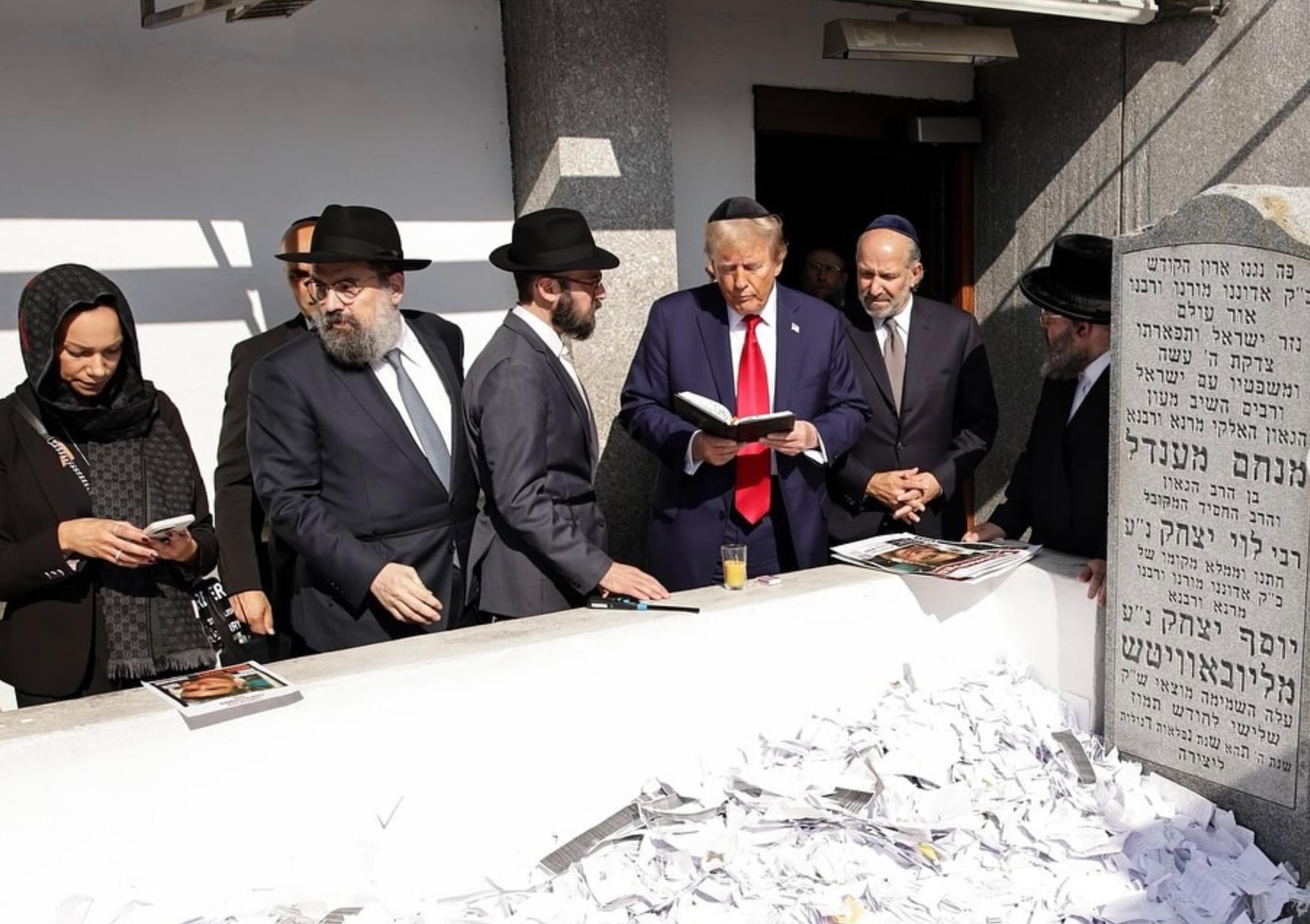
the rebbe’s final resting place is “the ohel,” or “the tent.” it’s a pilgrimage site for jews from all over the world and is located in queens, ny. it’s become common for politicians (and howard lutnick, i guess) to visit it on the campaign ⇩
or “those from tzfat.” it’s possible the guy whose minyan we fled was somehow tied to the tunnels
or “the friederker rebbe,” which translates to “the previous rebbe”